
Advertisement


DOC & DOCG
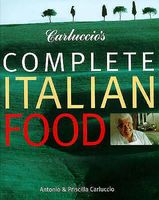
By Antonio Carluccio and Priscilla Carluccio
Published 1997
The Italian equivalent of the French appellation contrôlée, DOC means Denominazione di Origine Controllata and DOCG Denominazione di Origine Controllata e Garantita. It is only since 1966 that the Italian Government has introduced legislation to control the previously chaotic production and classification of all Italian regional wines. Italy is quantitatively the biggest wine producer in the world, but qualitatively Italy has suffered for a long time of being seen as the producer, with a few exceptions, of simple wines. This is despite the fact that Italy perhaps offers the widest differentiation of types of soil, climate and grapes among all the wine-producing countries. A few far-sighted Italian wine producers, who have looked over the shoulder of their French cousins, already advanced in the method of producing exceptional wines, have in the last 30 years or so produced such improvements that Italians can count on perfectly made wines that can compete with the best in the world. The combination of the new legislation and private initiative has given birth to a new breed of wines like Tignanello, Sassicaia and Solaia. The DOCG denomination is reserved for wines originating from a very small defined area, where only the grapes from that area are used. Of the more than 300 DOC wines in 1994, only 13 had this specification.