Advertisement

Boning Leg of Lamb
Appears in
By Anne Willan
Published 1989
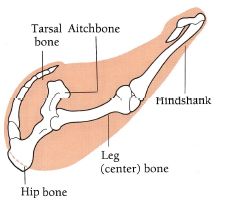
Leg of lamb is boned to tie as a boneless roast, with or without stuffing, or to slit open and butterfly. The partial boning of a leg, removing the pelvic bone, will make carving easier. The knobbly end of the shank bone can also be trimmed, leaving enough bone to hold the roast steady for carving.
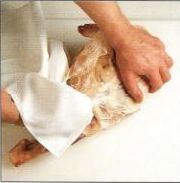
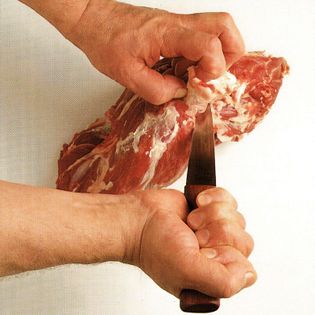
- Steady the joint with your hand. Tear off the skin (you may get a better grip with a cloth), cutting where necessary with a knife. Trim any fat from the meat.
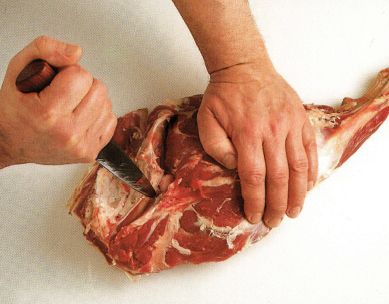
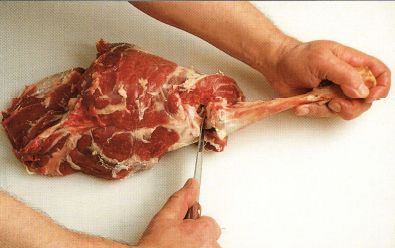
- The pelvic bone is made up of the aitchbone and hip bone. It is an irregular-shaped bone running at an angle to the leg bone, and attached to it by a ball and socket joint. To loosen it, place the leg on a board, pelvic bone upward. With a sharp knife outline the edges of the bone that are exposed at the sirloin end.
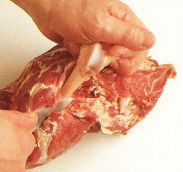
- Cut deeper around the pelvic bone, freeing it at the joint and cutting through the tendons connecting it to the leg bone. Remove the bone.
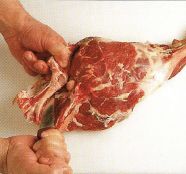
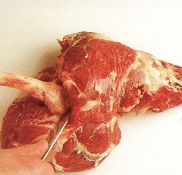
- Grasp the shank bone at the tip of the leg and cut all tendons at the base of the bone. Cut the meat away from the bone, keeping the meat on the other side in one piece.
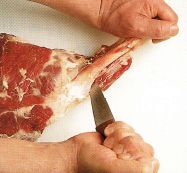
- When the bone is clean, locate the knee joint at the point where the shank bone is connected to the leg bone. Cut the tendons at the joint and remove the shank bone.
- Now only the leg bone remains in the center of the meat and is removed “tunnel” fashion, by gently releasing each end from the meat.
- Cut and scrape to clean the bone, easing it out as you work.
- Twist the bone and pull it out. With a small knife scrape the tendons one by one from the meat.