
Advertisement
The Procedure for a Persian Marriage
Appears in
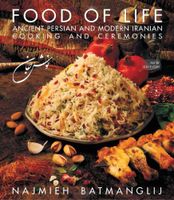
Published 2011
- Step #1. The suitor, or khastegar, with his parents or close elder relatives, pays a visit to the parents and close relatives of his future wife and asks for her hand in marriage.
- Step #2. Engagement ceremony, shirni-khory, and exchanging of rings and eating of sweets. Both sets of parents give formal permission for the future bride and groom to get better acquainted.
- Step #3. Ba’leh borun, a ceremony that is attended by the close elder families of both the bride and the groom to discuss financial matters, rules, and conditions of marriage, such as mahr and jahaz, and items of the dowry listed in the marriage contract. The mahr is a sum of money, an object of value, or a piece of property that the groom agrees to give to the bride. It is her financial security in case of marital discord. The bride brings her dowry, or jahaz, to her new home. The details of the mahr and jahaz are spelled out in the qabaleh, or marriage contract. The dowry can be silver, gold, carpets, household equipment, sometimes even land and real estate.
- Step #4. Aqd, or marriage-contract ceremony, the betrothal ceremony where the legal contract, aqdnameh or qabaleh, is read, agreed upon, and signed. Aqd is the legal and religious union of the marriage, while the true ceremony establishes the spiritual union of the bride and groom.
- Step #5. Arusi, a lavish reception and celebration held after the aqd. As the bride and groom walk into the reception, the guests collectively sing a wedding song, which I have included here. Through this reception, the social recognition and union of the bride and groom are established, and this marks the beginning of their married life.
- Step #6. Pa-takhty (literally, “by the bed”), the last phase of the wedding. Friends and family who were invited for the aqd and the arusi pay a visit to the newlywed couple the day after the wedding to offer their blessings and more gifts. At the close of pa-takhty the couple is considered truly married.
- An important point for the mothers of the bride and groom to keep in mind before the ceremony: Remember that this is meant to be a joyful event and a spiritual ceremony and not a performance or competition with another family. Good luck and mobarak-bad!