Advertisement
Kitchen Rules
Appears in

Published 2024

Here are some simple rules to follow as you work your way through the kitchen.
- 1. Practice kitchen safety. This is an absolute must when working with hot things such as stoves, ovens, slow cookers, and air fryers, as well as when working with sharp items such as knives. Even if you have some experience in the kitchen, it’s always good to ask for help and have an adult present to assist you when needed.
- 2. Avoid cross-contamination. Do not let food items that you have to cook, such as chicken or pork, touch other foods that you will be eating or don’t need to cook, such as salads or raw veggies. When preparing raw foods that need to be cooked, don’t use the same utensils for other food items (e.g., don’t use the same cutting board you used to cut raw chicken to then cut a carrot). Be sure to properly clean and sanitize utensils before using them for another food item.
- 3. Wash your hands. It is recommended that you wash your hands with soap for at least 20 to 30 seconds. Washing your hands avoids cross-contamination and spreading germs. Always wash your hands before you start working with food, before serving others or yourself, and when dealing with raw food (especially any raw meats, poultry, or eggs).
- 4. Wash your veggies and fruits. Wash your vegetables and fruits before consuming or cooking them, so you remove any harmful chemicals or bacteria from them. However, you don’t want to necessarily do that with your meats. The USDA Food and Safety Inspection Service recommends you do not wash your meats because it increases the risk of cross-contamination and foodborne illnesses.
- 5. Stay focused and read through instructions carefully. Read through the recipes before you start and as many times as you need to ensure you understand them and know what ingredients and equipment you require. Keep in mind that some recipes have time ranges (e.g., cook until lightly brown for 8 to 10 minutes) that account for various stove-top options and temperatures. Start with the lower time range, and if the food is not done, keep cooking until it is. However, once something is overcooked, there is nothing you can do. Make sure that anything that is raw is fully cooked before consuming it, such as chicken or pork; when in doubt, you can use a thermometer to check whether something is cooked properly.Internal temperatures and how to use a thermometer.
- 6. Clean up after yourself. Be sure to clean up utensils once you are done using them, wipe down and disinfect countertops, and put tools and ingredients away once done. This will ensure less mess and less confusion in the kitchen.
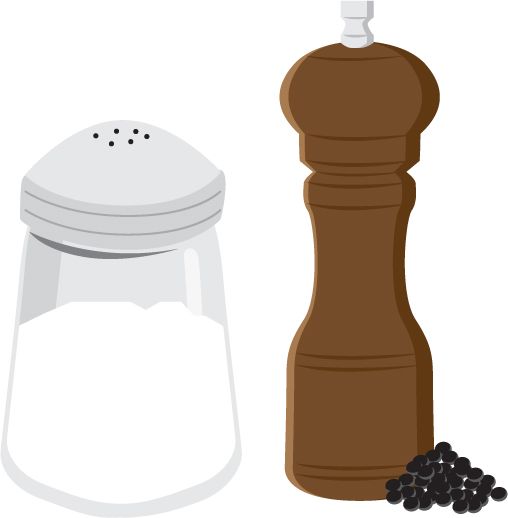
- 7. Season your food. Tasty food requires seasoning. Be sure to at least add some salt and black pepper (preferably freshly cracked using a pepper grinder) to your food. Taste is a matter of preference, so you may want more or less salt and pepper added to the recipes than is called for. And most importantly, taste your food before you serve it.