
Advertisement
Brioche
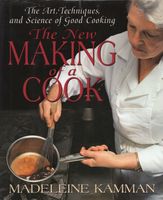
Published 1997
The origin of the name brioche as I try to pinpoint it here is the result of my own deductions based oh my training in the philology of Germanic languages. The origin of the word remains undefined in the French edition of the Larousse Gastronomique, the two-volume version of the French Larousse dictionary, and possibly to the most prominent French food historians. The best ancient brioches have always been recognized as having been made in Normandy, where for a long time the language was not pure French but peppered with many northern Germanic words, due to the extensive invasions of that region by the Norse (A.D. 850 to 920), who gave it its current name. Brioche is probably such a word and derived from the same root as the modem German brechen, which in English means to break, both derived from the Old English brecan and the Old High German brehhan. The word brioche (contained in the modem German past participle of brechen, gebrochen) probably refers to the way the dough was deflated and allowed to rise again several times when it was made with bread leaven instead of the yeast we use today. The French technical expression for our colloquial “punch down” is rompre, which can mean both to break and to punch down. Another remnant of this old German root is to be found in the name of the pain brie (broken bread) of the little Norman city of Honfleur, the dough of which was originally “broken” by beating it with the heel of a wooden shoe, an action done nowadays by a cutter fitted into a round revolving bowl containing the dough. In the Norman-French verb for break, brier, the consonants g, hh, or ch have probably disappeared because they were difficult for native Romance language speakers to pronounce. The i was probably added to render the word as fluid to pronounce as the ch does in the modem German brechen.