
Advertisement
The Chinese Influence
Appears in
By Amy Besa and Romy Dorotan
Published 2006
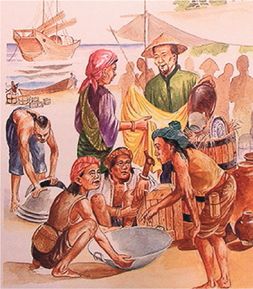
Ask a Filipino to name typical Filipino dishes and he or she will invariably list pancit and lumpia. I encounter dumbfounded looks when I mention that these are Chinese in origin. Much of Filipino home cooking traces its roots to Chinese ingredients, cooking methods, and seasoning. The influence of the Chinese came with the traders who brought noodles, ducks, duck eggs, soy sauce, soybeans, sausages, and other affordable, accessible foods that could be eaten on a daily basis.
Since the sixteenth century, poverty and social upheaval in mainland China have caused a massive influx of Fujianese and Cantonese into the Philippines. As Chinese merchants and traders settled throughout the country establishing small businesses, they intermarried with Filipino women. It was a common practice among the Chinese who came to the Philippines to take a Filipino wife to gain acceptance within the community while maintaining a family in China. Today most Filipinos have Chinese blood in their veins and most Filipino cooking bears the traces of this legacy.