
Advertisement
Iloilo Markets and Food
By Amy Besa and Romy Dorotan
Published 2006
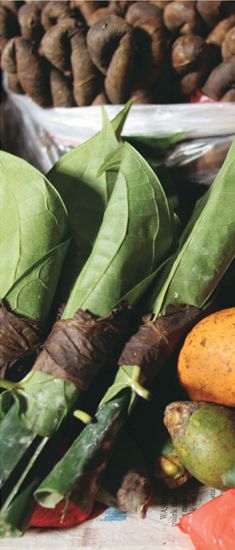
Nga-nga [beetle nut and leaves].
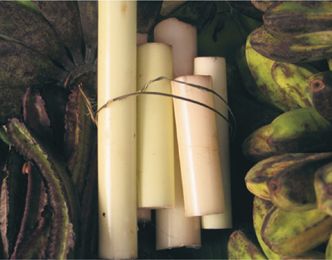
Banana trunk.
In Jaro, Iloilo, Thursday is market day. Called Huebesan (Jueves is Thursday in Spanish), it is a very old tradition of selling finished goods without a middleman. Vendors from all over the island go from one market to another for a day at a time. All kinds of products are sold: food, rope, tobacco, farming implements, knives of all shapes and sizes, clay pots, and woven mats. Even the people who dabble in superstition and mysticism get their raw materials here. At one table, Rosario Tuam presides over herbals and exotic items called anting-anting, amulets to ward off evil or bring good luck to the wearer. Tiny bottles filled with red seeds, dried strands of bark or root are an antidote for desperate people, “para sa mga sawi,” who believe that someone has put a hex on them. In larger dark bottles is a tonic she calls Vino Agoso, “para sa nerbiyos” (for the nerves) made from cocoa, banana bark, and sugar. There are the vegetable trademarks of classic Ilonggo cooking: the tambo [bamboo shoot] and ubad [pith of the banana bark], which some vendors recommend cooking with grated native corn, coconut milk, tugabang, saluyot, and takway [all local leaves]. There are baby mangrove crabs (on their way to extinction) and dried fish made with local fish like gumaa for daing [butterflied, dried fish] and the tabagak for tuyo.