Advertisement
Types of Cooktops

Published 2014
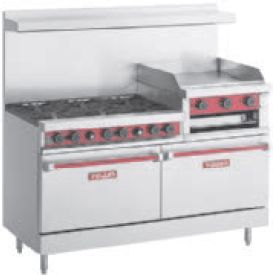
Open elements (burners), either electric coils or gas flames. These tops are the fastest to heat and can be turned off after short use. However, cooktop space is limited to one pot per burner.
Open-burner gas range with griddle
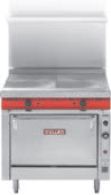
Flattop or hot top (lightweight). Burners covered with steel plate. More cook space is available. Top supports moderately heavy weights.
Flattop range
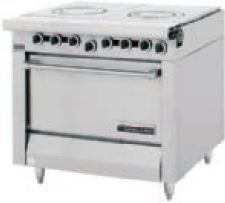
Heavy-duty flattop. Burners covered with heavy cast steel. The top supports many heavy pots. A thick top requires longer preheating. Set burners for different levels, and adjust cooking heat by moving pots to different spots on the top. A ring-top range is a type of flattop that has removable rings, allowing access to even more intense heat from the flames below.
Ring-top range
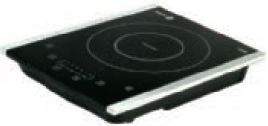
Induction cooktops. The top of an induction unit does not become hot. Rather, it works by magnetically agitating the molecules in steel or iron cookware so the cookware becomes hot. As a result, much less energy is used and the kitchen stays cooler, because only the pots and pans and their contents become hot. There are no hot surfaces or open flames. Also, no warm-up is required. The top can be turned instantly on or off. Small, easily portable induction burners are available. These are useful for off-premise catering operations, for buffet service, and even for tableside heating and cooking. The disadvantage of this cooktop is that only iron or steel pots can be used. Traditional aluminum or copper cookware will not work. Some manufacturers of cookware have responded to the new demand by producing pots and pans made of aluminum sandwiched between layers of stainless steel. In this way, the good heat-conducting qualities of aluminum are preserved as well as adapted to this new technology.
Portable induction cooktop