
Advertisement
Food in Russian Literature
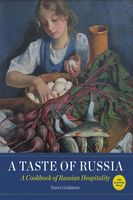
Published 1983
These rituals of hospitality were all preliminaries leading up to the main attraction, the meal itself. This meal could range from a simple, yet thoroughly satisfying bowl of borshch (beet soup), served up with black bread and home-cured pickles, to a lavish feast of many courses, including such delicacies as ryabchik (hazel hen) in a sour-cherry sauce, or the roe of sturgeon, better known as caviar. Obviously the gentry ate a great variety of foods and enjoyed all kinds of delights, while the peasantry knew little other than their repertoire of hearty soups and pirogi (pies). Russian literature is rich in descriptions of food because to a Russian, cooking and eating are vital concerns. Great moments in literature often coincide with an account of what is being—or about to be—consumed. This practice extends to even the most spiritual of Russian writers. In the chapter entitled “A Scandal” in Fyodor Dostoevsky’s The Brothers Karamazov, Fyodor Pavlovich Karamazov has been invited to the Father Superior’s room at the monastery. The initial description of the room focuses on a lavishly set table, dazzling the eye: