Advertisement

Skinning and Trimming
Filleting Sole Filets
Appears in

Published 2010
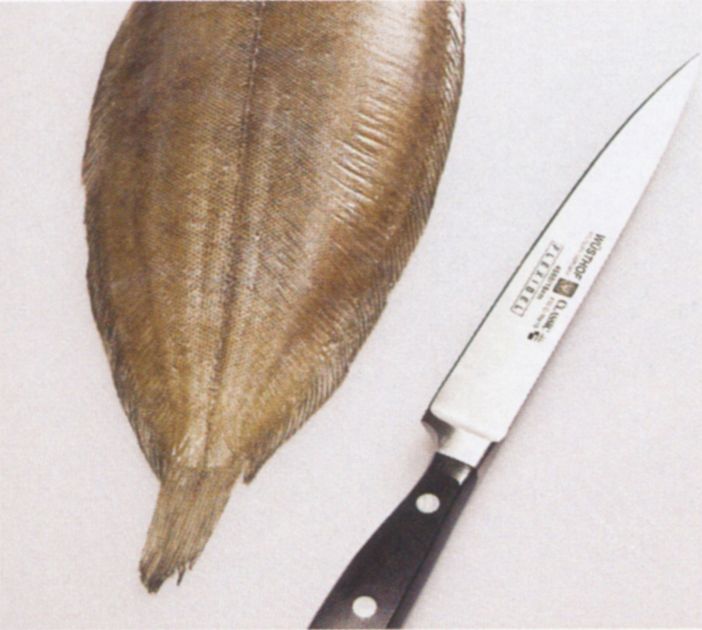
- A thin bladed knife, usually referred to as a filet de sole knife is the best tool for filleting flat fish.
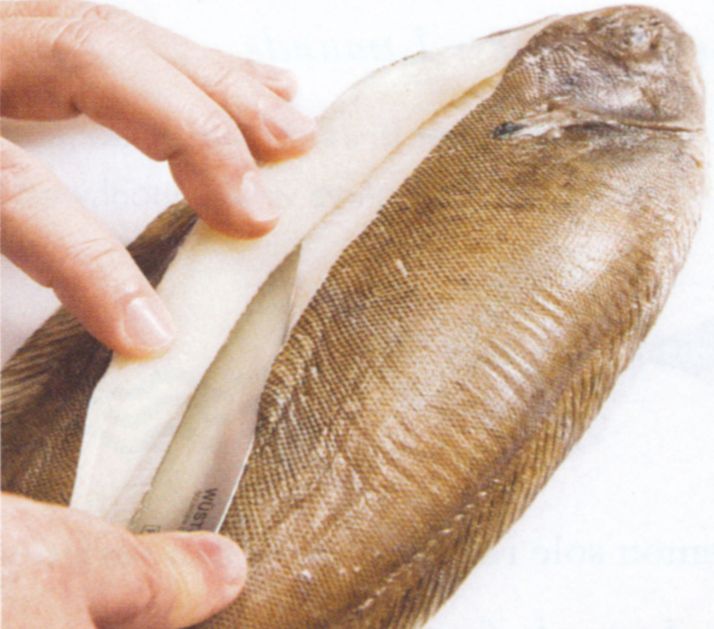
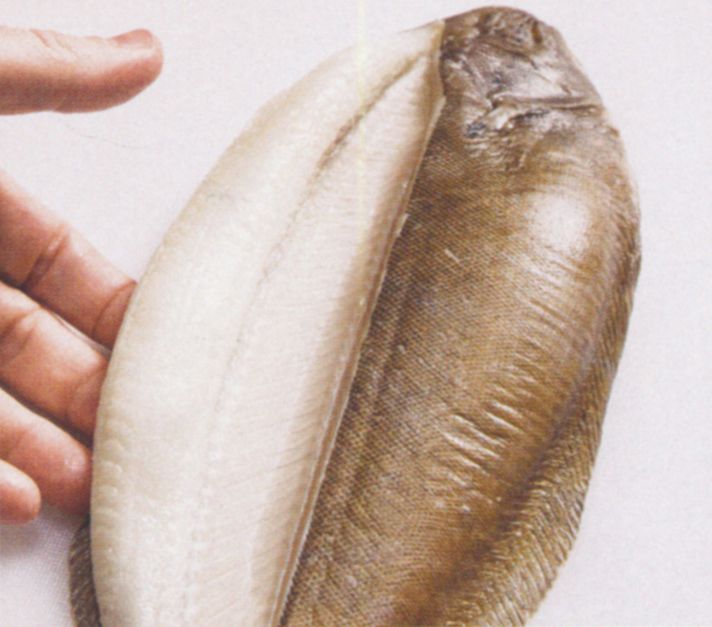
- Filets will be removed from both sides of the fish. Filets on the white side are considerably smaller than the dark side.
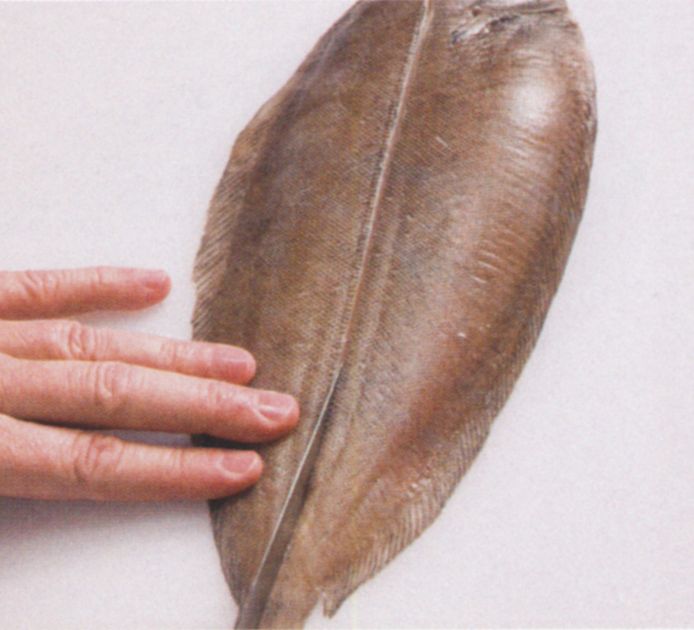
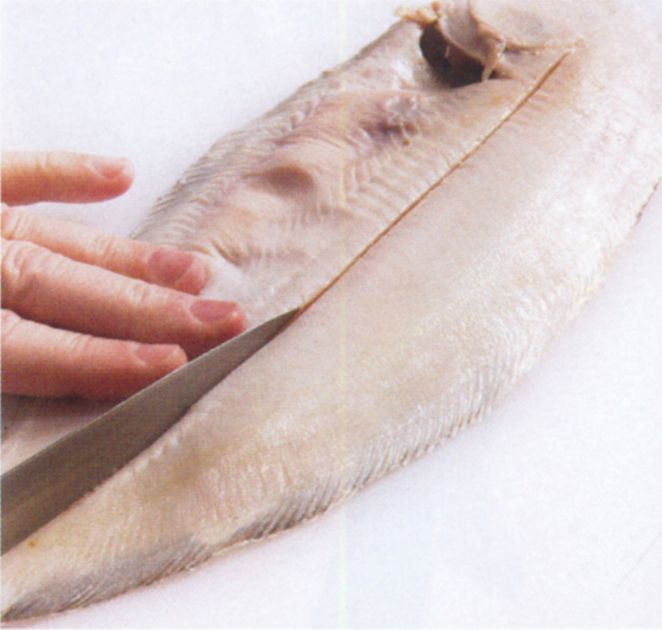
- With the dark side up, feel for the center bone.
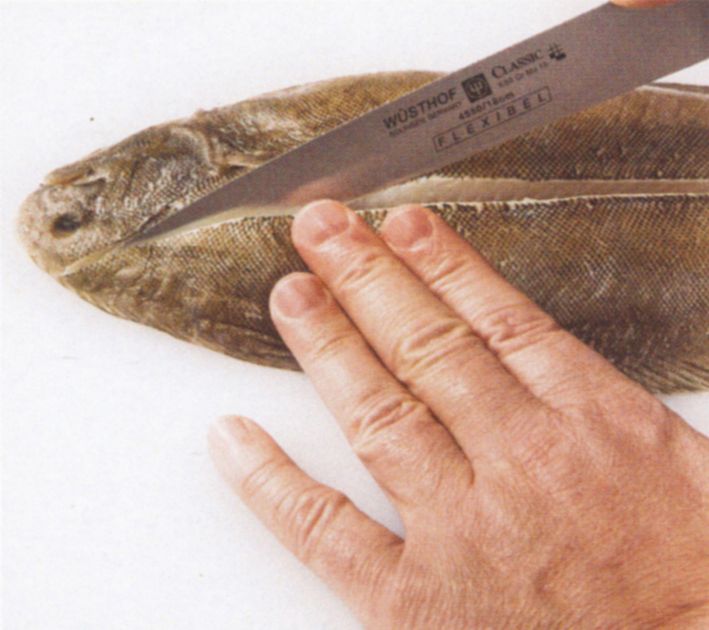
- Gently run the tip of your knife down the center.
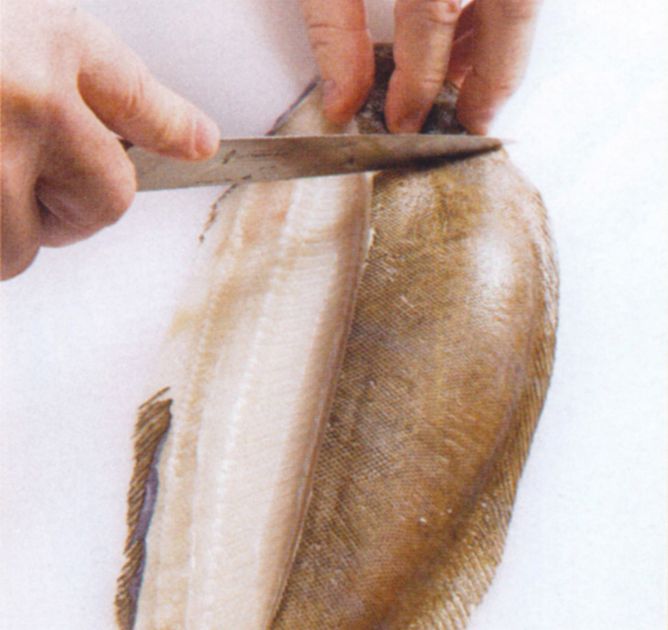
- Following the side bones, continue cutting with the knife blade at a shallow angle to disengage the fillet.
- Continue running the knife down until the bones are exposed.
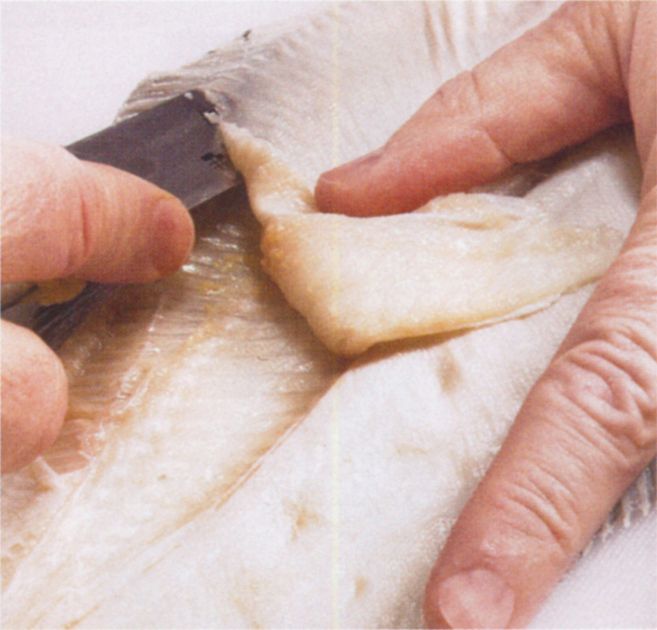
- Find the edge and pierce with the tip of your knife. Repeat moving the knife up the side.
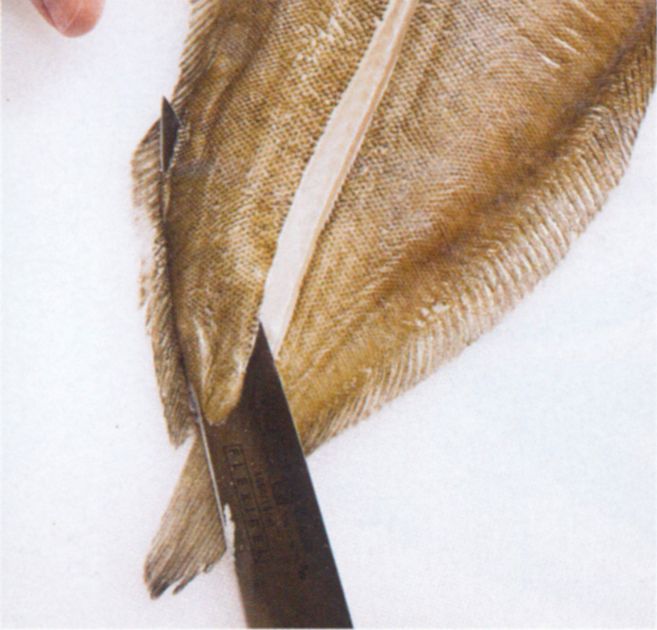
- Cut at a 45-degree angle at the side of the head to detach the fillet.
- Make the same angled cut on the other side of the head.
- Cut well around the head to make sure all of the fillet has been detached.
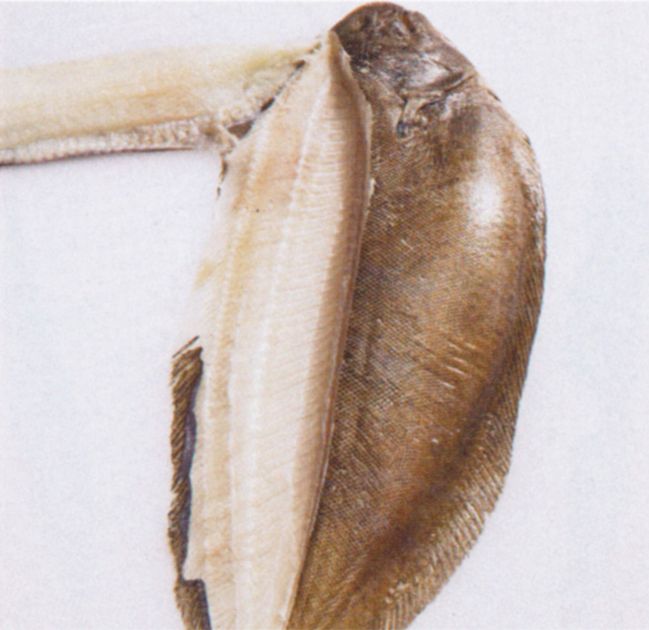
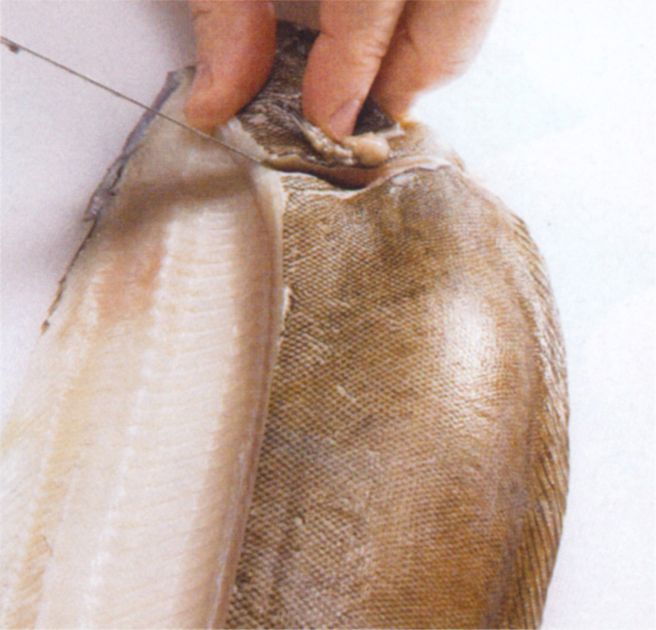
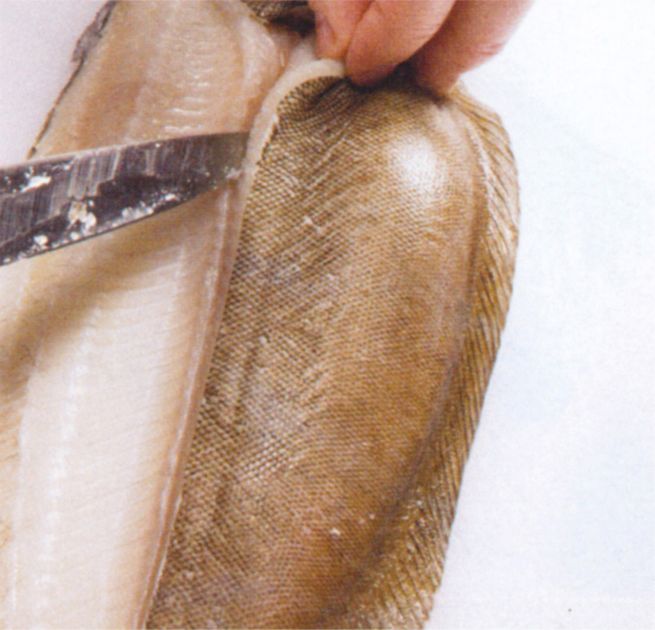
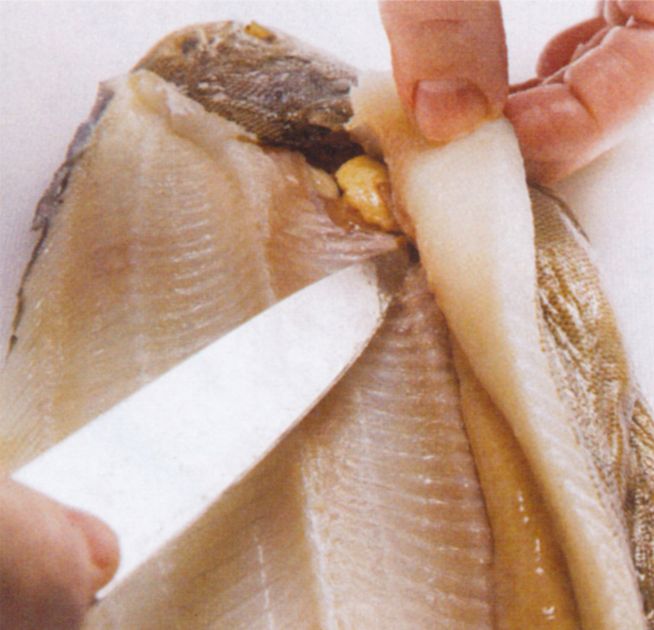
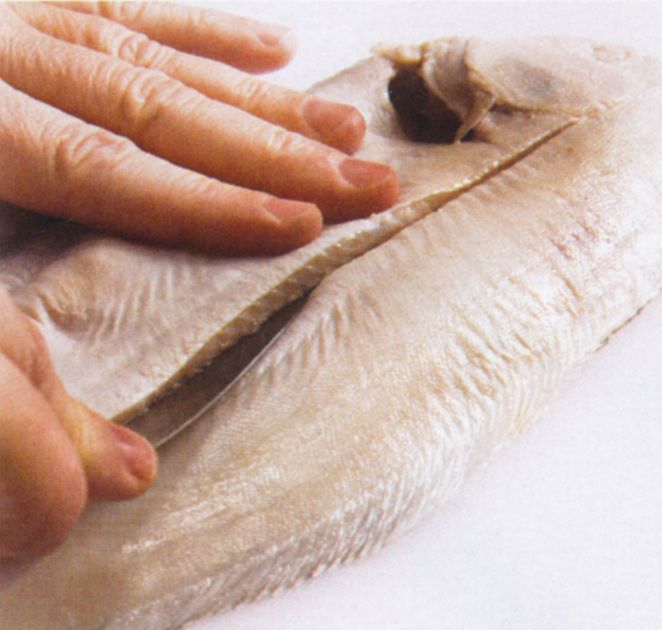
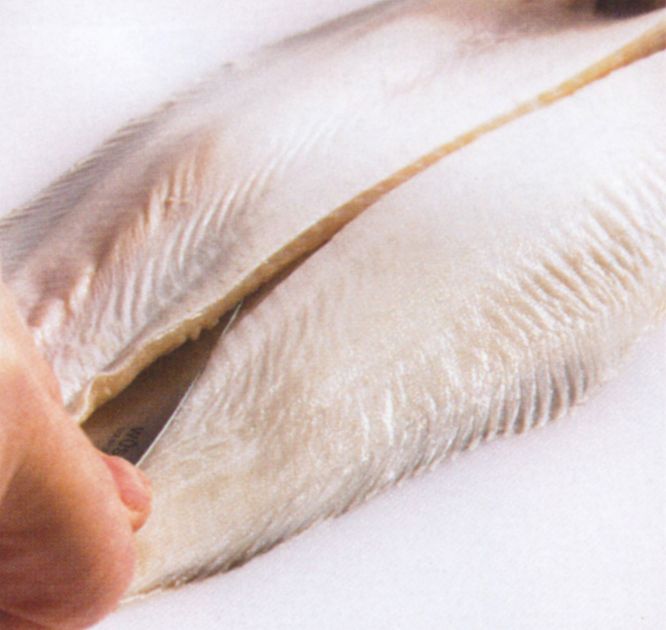
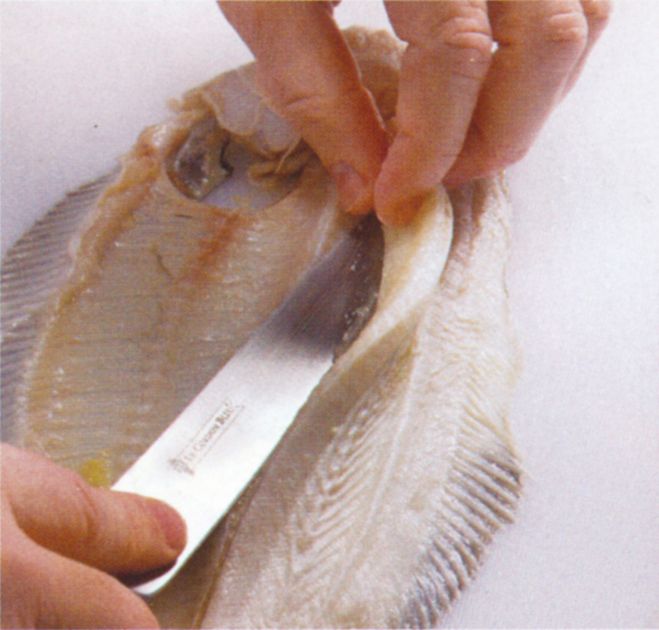
- Now, follow down the central bone, using the bones to guide the tip of the knife.
- Having a flexible knife will give you the ability to cut very closely to the bone.
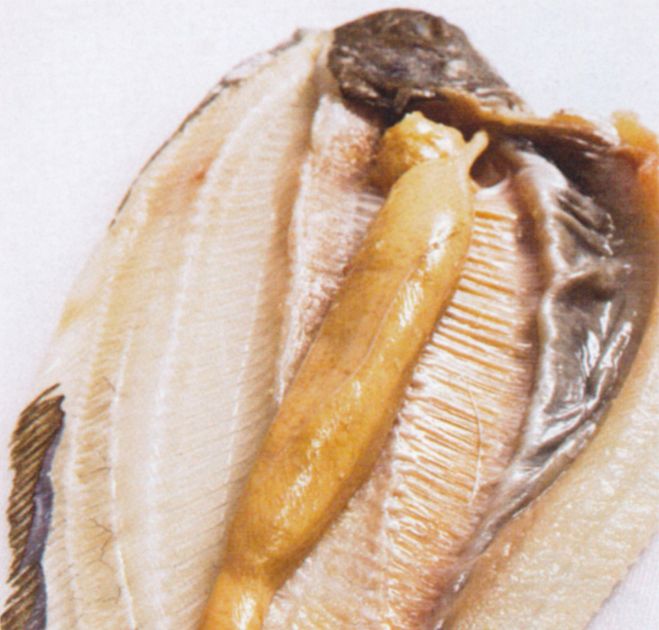
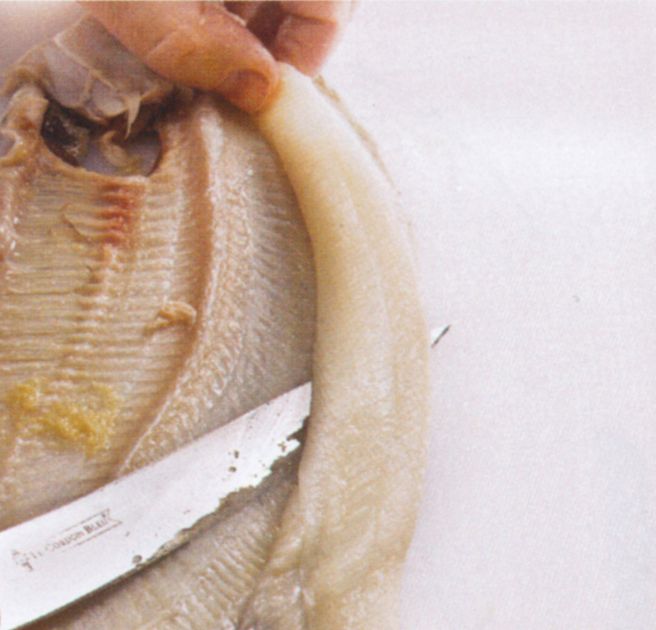
- Continue slicing while lifting the fillet, until the roe sack is revealed. Be careful not to pierce it.
- Disengage the roe sack with your fingers and move it away.
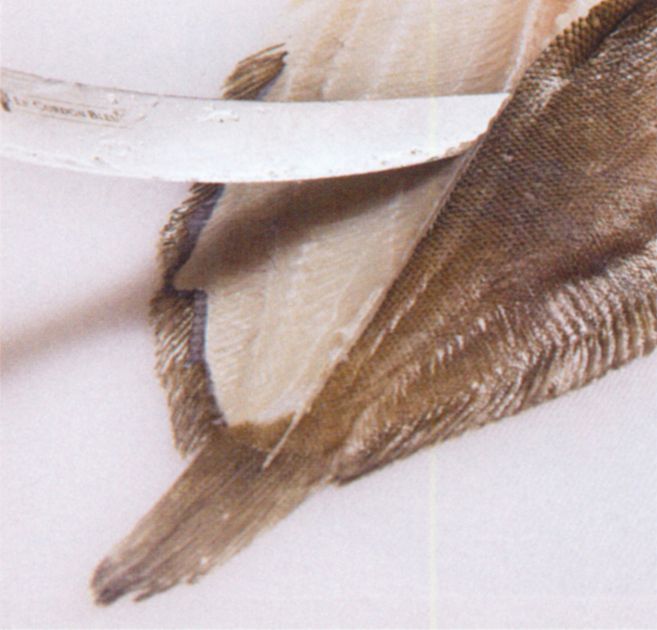
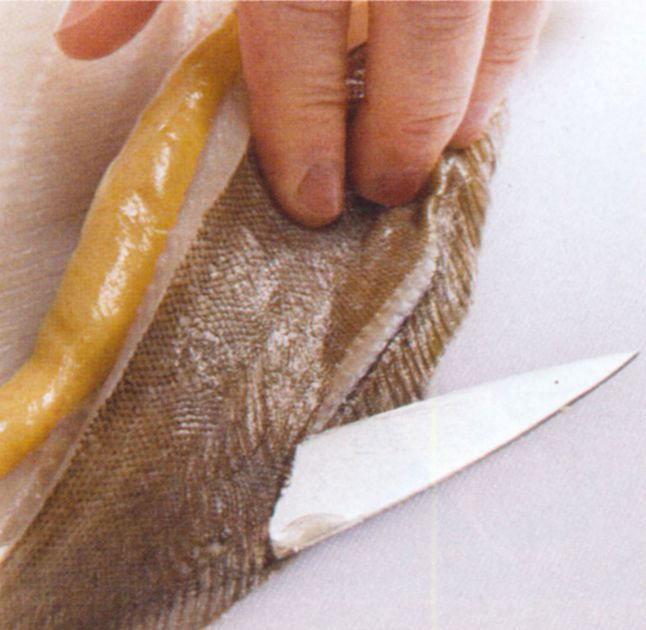
- Pierce the outer edge of the fillet and cut down to disengage.
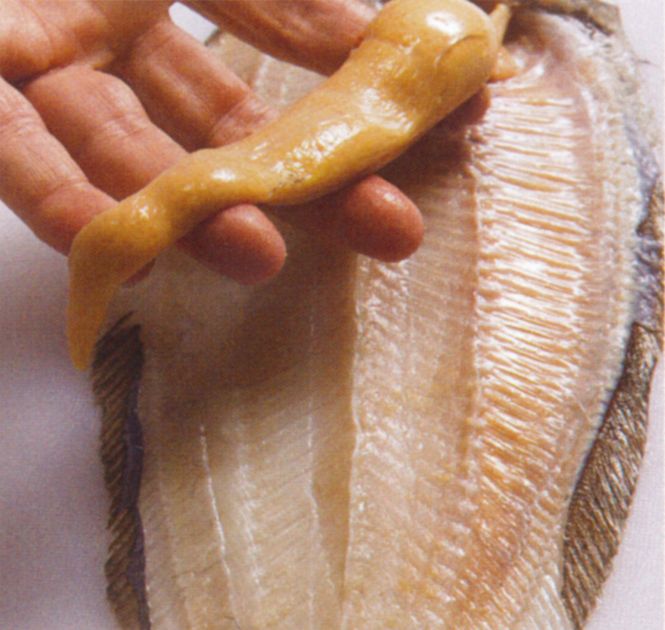
- Lift the roe sack and carefully remove it.
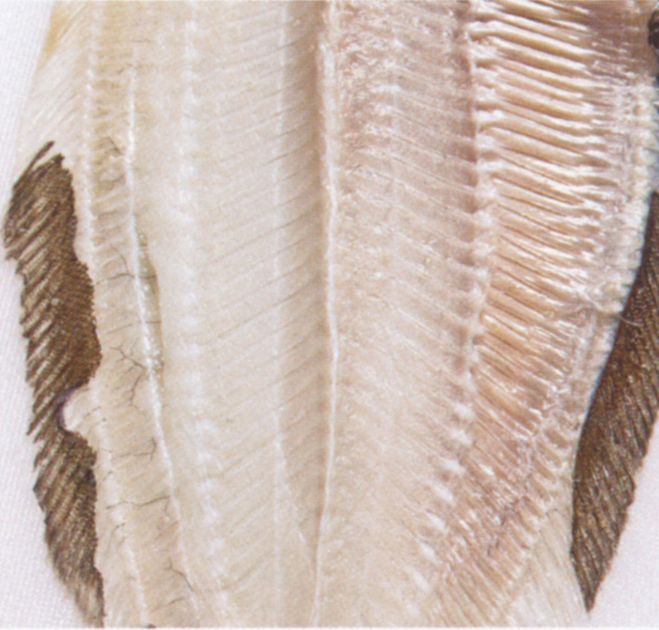
- There should be barely any flesh left on the bones.
- Turn the fish over and run the tip of the knife down the center.
- Follow tile same procedure, using the tip of the knife to loosen the flesh from the bones.
- The filets are much smaller and less meaty.
- Follow the bones cutting the skin to disengage the filets.
- Repeat on the other side.
- Cut through the skin.
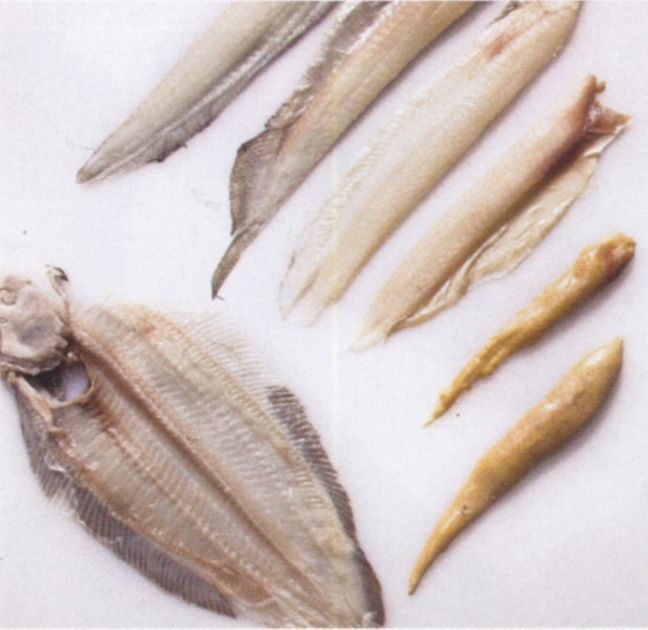
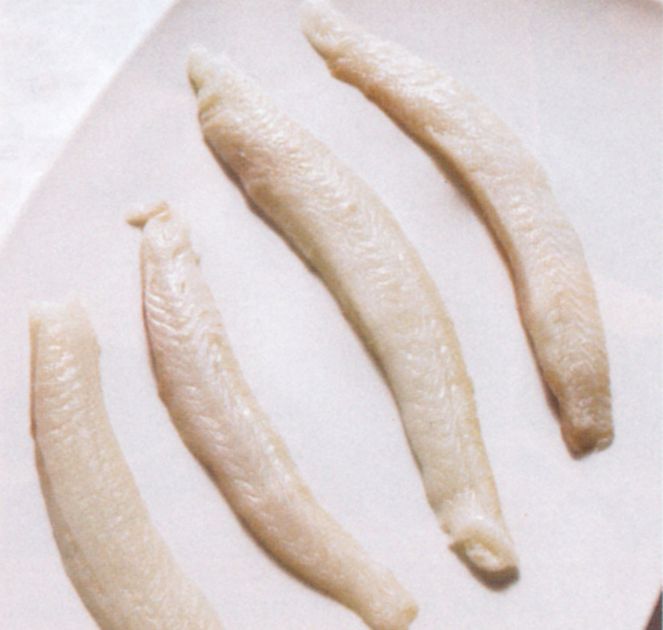
- Four filets of sole, the two roe sacks. The carcass can be used for making fumet after degorging.
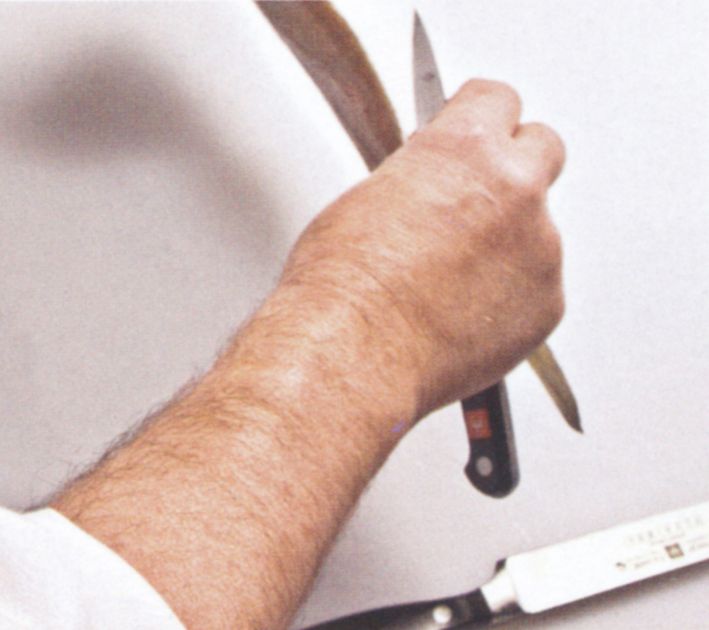
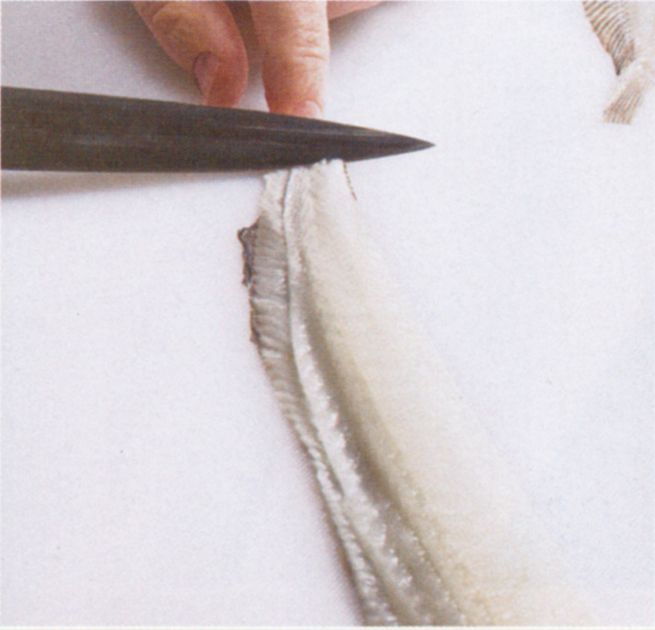
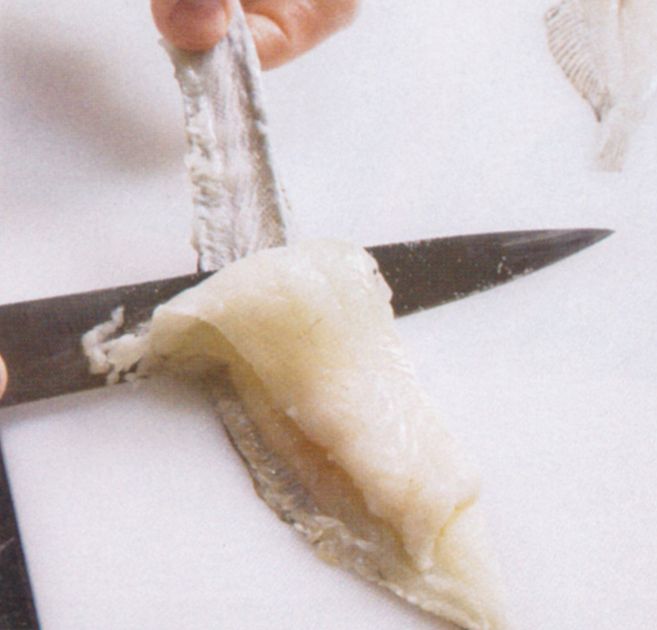
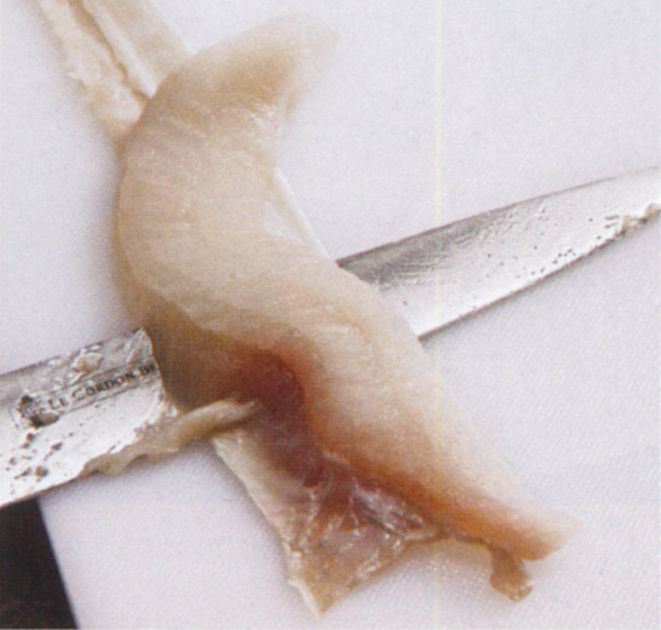
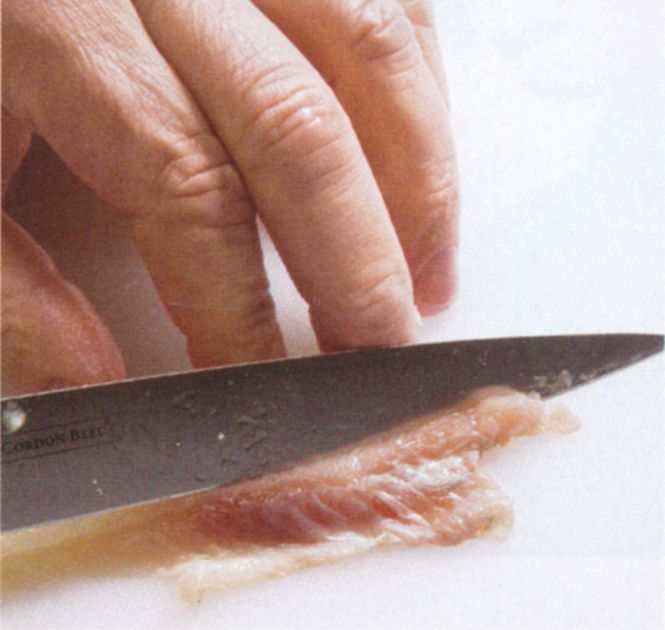
- To skin: lay the filet skin-side down on the cutting board. Make a small incision at the small end and slip the blade at a shallow angle between the flesh and the skin.
- Holding the skin securely with one hand, use a gentle sawing motion while moving the knife down toward the other end.
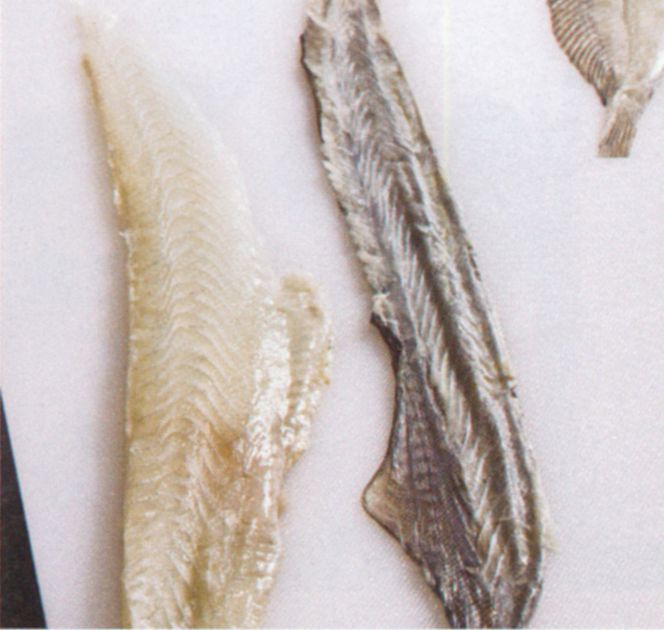
- If done properly the skin should be completely clean of any flesh. Discard the skin.
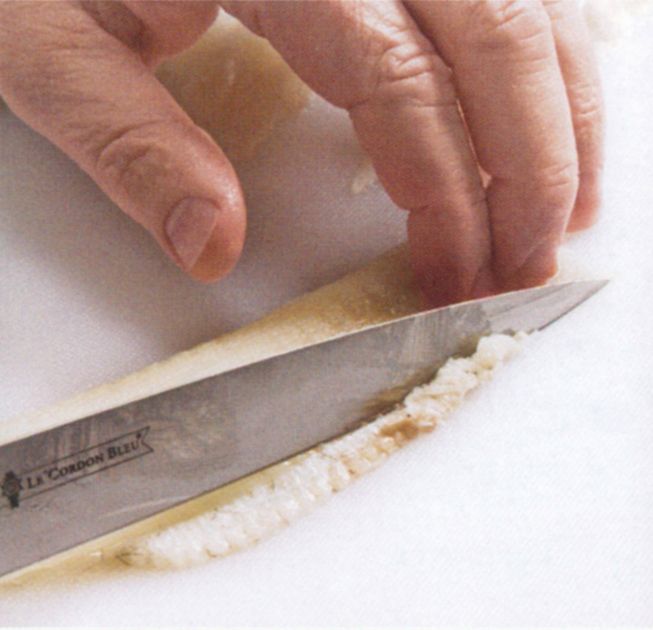
- Trim the sides.
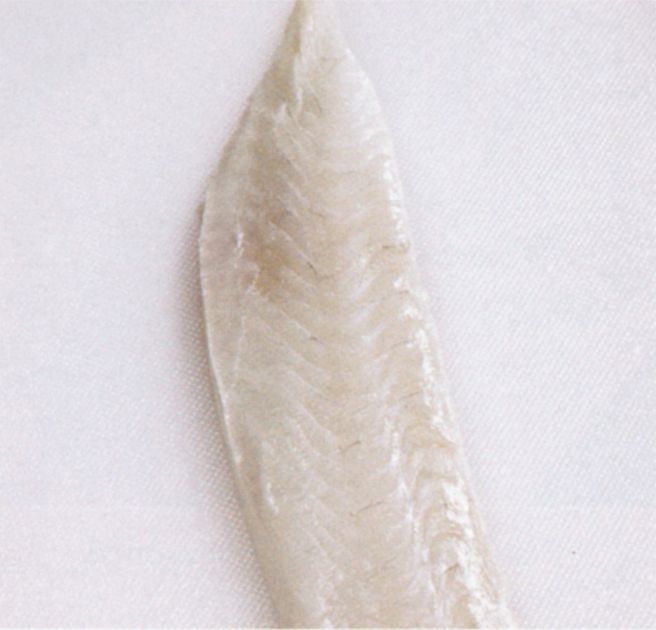
- The filet should be trimmed of any dark areas.
- Repeat the same procedure with the white side.
- Trim off the dark portions from the flesh.
- The filets are ready for cooking. The trimmings can be degorged and used for making fumet.