
Advertisement

Meringue
Appears in
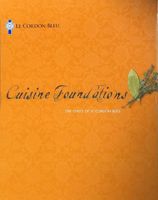
Published 2010
Although the origins of the term are unknown, the earliest use of the word appeared in the Nouveau Cuisinier Royal et Bourgeois, by François Massialot in 1691. The term was kept when the book was translated into English in 1706. However, a mixture similar to meringue is included in François La Varenne’s Le Pâtissier François, first published in 1653, but it is called biscuit sucre en neige.
Meringue is beaten egg whites to which sugar has been added. There are three types of meringue: French, Italian, and Swiss. French meringue is the easiest to make, but is considered a raw meringue and thus requires cooking before serving. Egg whites are beaten to soft peaks after which granulated sugar is gradually incorporated. The egg whites are beaten until the sugar granules can no longer be detected when the meringue is rubbed between two fingers. As a result of this process, the whites take on a smoother, tighter consistency. The meringue should be used immediately. It can be piped into shapes and baked in a low oven, or poached in sugar syrup.