
Advertisement

Sweet Cicely
Appears in

Published 1986
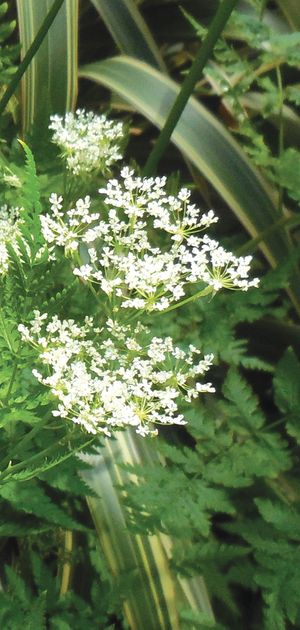
Myrrhis odorata Sweet cicely is a perennial, common in northern England and southern Scotland, becoming rarer northwards. In Ireland it is rare except in the north-east. It is found in grassy places, hedges, roadsides and woods, and flowers in May and June.
The Latin names are derived from the Greek word for perfume, because of the myrrh/aniseed-like scent of the plant. All parts of the plant can be used, but the young seed pods are especially good. The aromatic leaves may be used as a salad herb or boiled in soups and stews. The thick root may be boiled like parsnips, as was the custom in the 16th and 17th centuries, and eaten with oil and vinegar, when it was said to be ‘very good for old people that are dull and without courage; it rejoiceth and comforteth the heart and increaseth their lust and strength’.