Advertisement
Tools of the Trade
Appears in

Published 2010
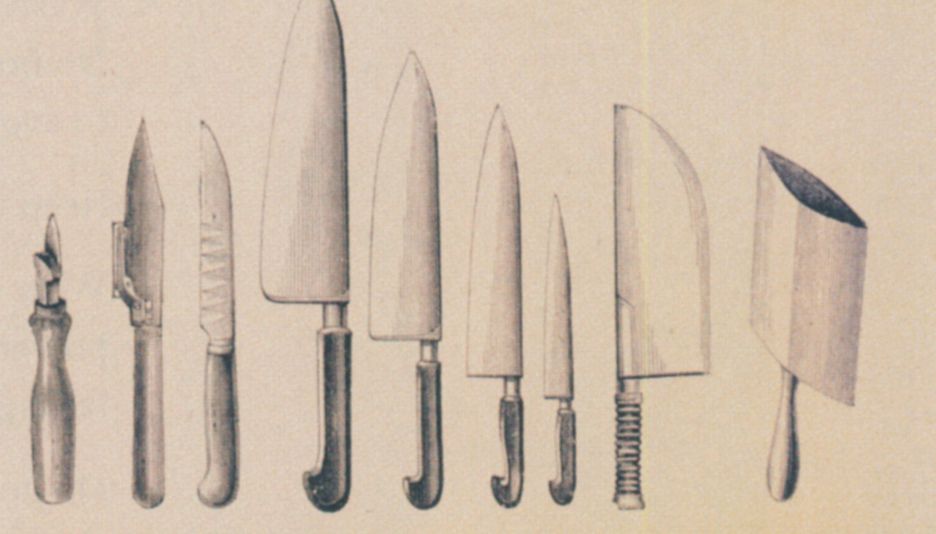
The knives and tools of a chef are like the instruments of a musician. Although the tendency of new culinary students is to buy every new knife or gadget they see, you will find that a good basic knife kit will provide you with all of the tools you will need to perform just about any task in the kitchen:
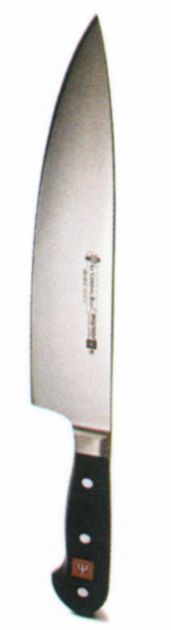
- Chef’s knife - couteau chef: An indispensable tool, the chef’s knife comes in various lengths, from 6 to 12 inches. A standard size is 10 inches, which provides the weight and length to cut large pieces and chop.
Chef’s knife (couteau chef)
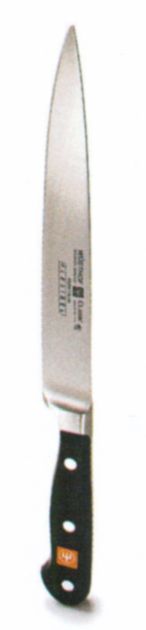
- Slicing knife – couteau émincer: With a long thin blade, this knife can be used for cutting thin slices and for carving large roasts.
Slicing knife (couteau émincer)
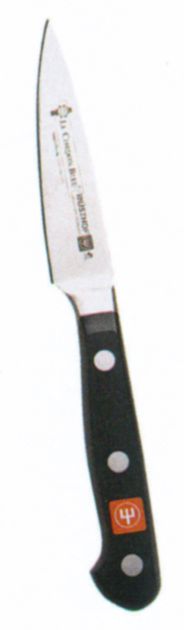
- Paring knife – couteau d’office: It never hurts to have more than one of these small knives, which come in different shapes and lengths. They can be used to peel, trim, and carve. The small blade can also be used for deboning small poultry and pieces of meat or fish.
Paring knife (couteau d’office)
- Serrated knife - couteau à scie: The “teeth” on this knife can cut delicate items such as bread or sponge cakes that require a sawing action over pressure.
Serrated knife (couteau à scie)
- Sole filet knife - couteau filet de sole: This knife is useful for filleting round and flat fish. It has a long, thin, flexible blade.
- Deboning knife - couteau désosseur: A knife with a short to medium blade, it has a small tip that is used to get in between the joints of meats and poultry. They come in various sizes, some specifically for meat or poultry.
Boning knife (couteau désosseur)
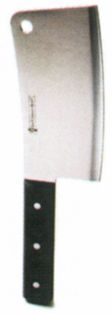
- Butcher knife or cleaver – couteau à batte: This heavy bladed knife uses its weight and thickness in order to cut through bones, and the back or flat side can be used to flatten escalopes.
Butcher knife (couteau à batte)
- Steel - fusil: Often incorrectly referred to as a “sharpening” steel, this tool maintains the cutting edge on your knife. Like dental floss, it should be used before and after use, or used periodically during the preparation of meals.
Steel (fusil)
- Roasting fork –fourchette: The fourchette is used to manipulate hot or delicate items. The tines are longer to provide distance from the heat.
Roasting fork (fourchette)
- Trussing needle - aiguille à brider: Like a giant sewing needle, this is used for trussing.
- Vegetable peeler – econome: This is used for peeling vegetables and fruit. Select one that has a pointed and curved tip that can be used to remove spots and stems.
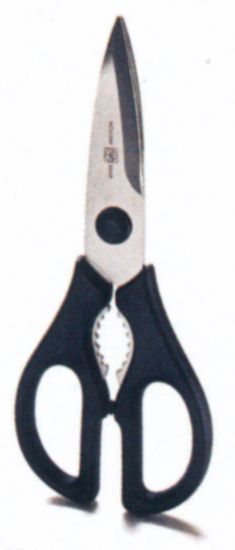
- Scissors – ciseaux: Heavy-duty scissors can be used for trimming fish and cutting herbs. Select a pair that comes apart for easy cleaning and sharpening.
Scissors (ciseaux)
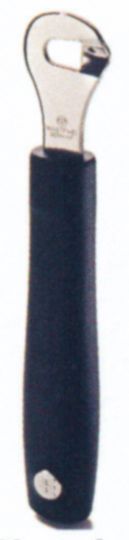
- Channeler - canneleur: This tool is used to create decorative furrows in fruits and vegetables, such as lemons and cucumbers.
Channeler (canneleur)
- Dough scraper - corne: Originally made from horn, this tool can be used for scraping particles from the work surface, cutting or portioning dough, or scraping out bowls or pans.
- Pastry brush - pinceau: This brush is used for coating the interior of recipients with fat, brushing away excess flour, or brushing clarified butter on a finished roast.
- Rubber spatula - maryse: The rubber spatula has in many ways replaced the dough scraper (corne) and is used to scrape bowls and pans clean. Today, they are made from silicone and are heat resistant so they can be used for cooking.
- Wooden spatula - spatule en bois: This type of spatula is ideal for stirring hot foods without itself getting hot.
- Knife kit - trousse de couteaux: A soft knife roll or a hard case allows you to easily transport your knives and tools. A knife roll is light and portable as well as easy to store; however, you must ensure that the knives are secured and fully enclosed. Make sure that the straps and clips are tight enough to prevent the knives and tools from moving. A hard case can carry much more and different types of tools; however, you must ensure that it closes securely and that the cutting edges of your knives are protected. Also observe caution when searching about in the case for something!