
Advertisement
A Wealth of Tastes in Traditional Regional Cuisines
Appears in
Published 2016
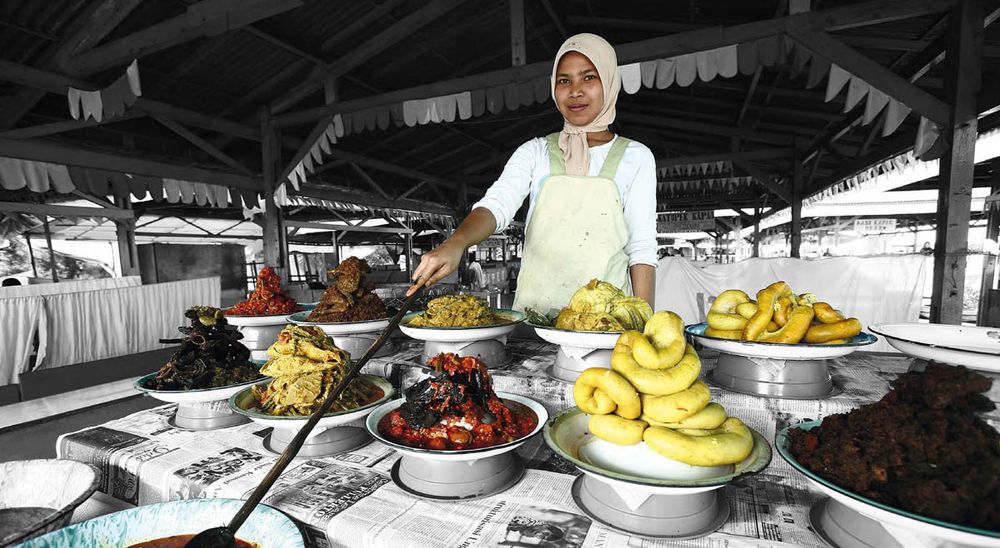
The group of islands known as Indonesia extend north and south of the equator along a major volcanic belt, to which the Indonesian soil owes its high fertility. The warm, humid climate and heavy rainfall provide ideal conditions for the cultivation of a wide range and variety of fruit and vegetables, including rice.
Indonesia’s geographic isolation and economic wealth, especially the valuable spices found in the Maluku island group, made the country a magnet for merchants and settlers from Portugal and Holland, together with Arabs, Indians and Chinese; all of whom have influenced the indigenous cultures, religions and eating habits. Consequently each region, over time, adopted these foreign inputs that eventually evolved to become part of each region’s cooking. Indonesians take the infusion of outside elements for granted. This differs from Singapore, for example, where the