
Advertisement
Organ Meats
Frattaglie
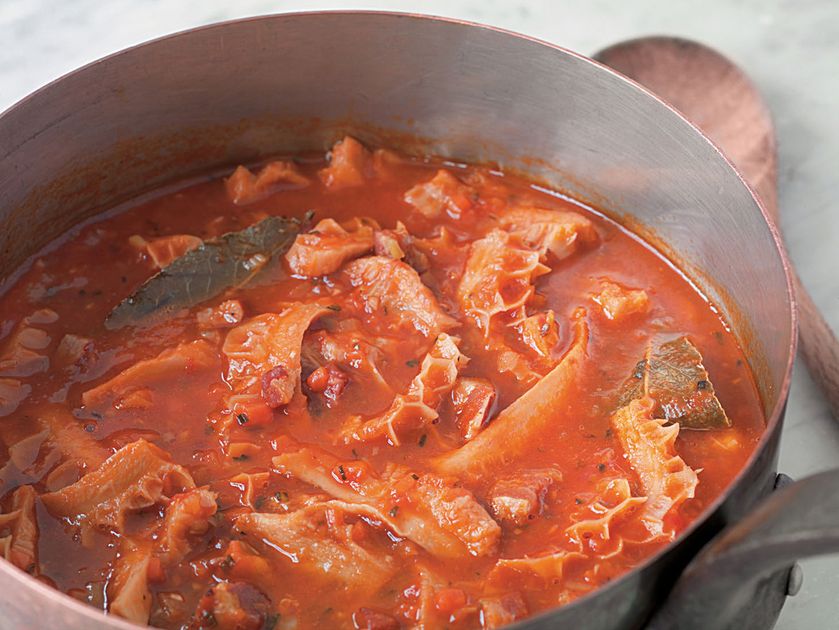
Organ meats, or offal (frattaglie), such as trotters, tongue, tripe, and sweetbreads have held an important place in Italian cuisine throughout history, in part because the more desirable cuts were reserved for the elite, while those who raised the animals for slaughter made do with what was left over.
But offal was not disdained by the wealthy. In his Opera written in 1570, Bartolomeo Scappi includes numerous recipes for offal, including sweetbreads, kidneys, liver, brains, tongue, cow’s udder, and calf’s head. His recipes are not limited to beef and veal; one entry is entitled “To prepare every cut—that is, every part—of a goat and chamois”; he also recommends methods for cooking pig’s head, as well as the head of a wild boar. In an earlier work,