
Advertisement
id="h_8">Hakka Classics
Dishes That Define
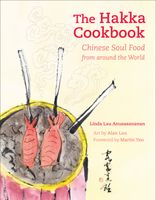
Published 2012
This book showcases the dishes I tasted around the world when I requested Hakka food. People presented easy everyday fare and banquet-worthy masterpieces. Some dishes were hard to distinguish from classic Chinese or Cantonese cuisine, while others bore the markings of a foreign home.
Yet some dishes seemed to define Hakka fare. I call them Hakka classics because they are the most characteristic of the cuisine. Many appear regularly on restaurant menus. The most famous Hakka dishes include salt-baked chicken (yam kuk gai), stuffed tofu (nyiong tiu fu), wine chicken (jiu gai), and pork belly with preserved mustard greens (kiu ngiuk moi choi). As the Hakka crisscrossed the globe, new regional classics appeared. In Singapore and Malaysia, I tasted taro abacus (wu tiuh sun pan jue), a sort of Hakka gnocchi made with taro. I also found a rice bowl topped with healthy savory tea known as pounded tea rice (lui cha fan). In a similar dish in Taiwan, the herbaceous tea took a sweeter form (lui cha). Also in Taiwan, a popular Stir-fry that used the elements of temple offerings acquired the name Hakka little Stir-fry (Hakka seow chow). Basin feast (puhn choi), a banquet layered in a washbasin, gained popularity in Hong Kong for family festivals and Chinese New Year celebrations. Soup noodles (sui men), brought to Jamaica by the Hakka, traveled to Toronto with the Hakka Jamaicans who migrated there. All over the world, Hakkas love their salted mustard greens (hahm choi) and pickled mustard greens (soen choi). They are so common, they have become a classic in their own right. Back home in San Francisco, I tasted braised chicken with preserved mustard greens (moi choi gai), a dish that captured the essence of Hakka flavor and could emerge as a new masterpiece.