
Advertisement
Wok Talk
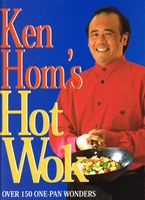
By Ken Hom
Published 1996
Must I use a special spatula/ turner to cook in the wok?
No. However, there are special spatulas/ turners whose shapes are specifically designed to help turn the food more easily in the hot wok.
How do I know when the vegetables are cooked?
Pierce the thickest part of the vegetable with the tip of a small, sharp knife. If it goes through easily, the vegetables are cooked. If the knife meets some resistance, it needs a little more cooking.
How can you tell if the meat is cooked?
This is tricky and subject to many considerations. Most meats are cooked when they are slightly firm to the touch. But, as with vegetables, some meats take longer than others. Experience and your own preferences will guide you. My own advice: don’t overcook any food. And remember, food removed from a very hot wok continues to cook.
Is there any vegetable or food I can’t cook in the wok, like, for example, soup?
It depends on the type of wok you have. In a carbon steel wok, certain types of acidic fruits like lemons or pineapple will remove some of the wok’s seasoning. This is not harmful to the wok but it does not look attractive. Also, a very strong vinegar sauce may remove the seasoning in a carbon steel wok. Other than these cases, you can cook almost anything in a wok and it is ideal for making soups too. Its wide surface allows the soup to simmer slowly and to be skimmed efficiently.
Why do my vegetables come out soggy?
Sometimes vegetables come out soggy when they are thrown in all at once, regardless of the water content. For example, if you add spinach with asparagus, cabbage, etc., all at once, the water from the spinach and cabbage will make the other vegetables soggy. Vary the quantity of cooking water you add according to how much natural water is in the vegetable you are cooking.
If you are using the wok covered, make sure you have a minimum amount of water in the wok when you cook your vegetables, otherwise the vegetables will oversteam and become soggy.
Soggy vegetables may simply be caused by too many types of vegetables being cooked at once. There should be no more than four to five types of vegetable at the most, some crisper, like green beans, others leafier, such as spinach. They should never be added at the ‘same time. Give the tougher, more textured vegetables a head start.
How do you season the wok?
Only carbon steel woks need seasoning. The best way to season it is to scrub it clean with cleanser or detergent the first time you get it. Wipe it dry. Heat it over medium heat, and add about 2 tablespoons of vegetable oil (not olive oil). With clean kitchen paper, rub the oil over the surface of the wok and repeat this rubbing every 5 minutes for about 20 minutes until the kitchen paper comes out clean. You now have a seasoned wok.
How do you wash the wok?
In warm water with a soft sponge. Do not scrub it or use soap or detergent. To avoid rust, dry it quickly over heat or wipe it dry with kitchen towels or paper.
My wok is rusty, should I throw it out?
No. If it is a good carbon steel wok, simply scrub the rust out with an abrasive cleaner, wipe it clean, and re-season it.
Why does my food stick to the wok when I’m cooking in it?
It could mean that your wok has not been seasoned properly or that you are using detergent to clean the wok each time which wipes out the seasoned surface. Or you may not be cooking properly in it, heating the wok first and getting it hot before you add the oil. Most commonly, food sticking means the wok isn’t hot enough.
How do I clean the wok with soap if the food is stuck in it?
Simply soak it in warm water and wipe it with a soft sponge. This should work unless the food has really been burnt in the wok. In that case, use the professional Chinese chef method. Heat the wok with any oil and burn the food until it flakes off. Rinse it in warm water. Dry it over high heat and re-season the surface of the wok by adding oil to the surface and rubbing it into the surface of the wok. Then, heat it gently for about 25 minutes.
What is the difference between carbon steel and non-stick woks?
I am partial to carbon steel woks because I think that they capture the more authentic flavours of wok cooking. This is because the wok is seasoned and can be heated to a very high temperature, the secret of wok cooking. However, I understand the need for convenience and today there are now good carbon steel, non-stick, woks which are effective.
One great difference is that non-stick woks are non-reactive. This means you can use them with a lemon sauce, or with acidic fruits, and you do not have to worry about re-seasoning the wok.
Can I use the wok on an electric/ceramic/ halogen /induction surface?
A wok can be used on almost any element, as long as it is hot. The best woks to use with those surfaces are the ones with a slightly flattened bottom so that some of the wok surface comes in contact with the fiercest heat.
Why shouldn’t I use an electric or stainless steel wok?
Unfortunately, electric woks do not maintain the high heat needed for successful wok cookery. The temperature drops as soon as food is added and it takes a while before it can reach a high heat again. Also, electric woks are quite expensive, as are stainless steel woks. And stainless steel woks have hot spots and when heated to very hot, food can burn very easily. They are therefore not appropriate for good wok cooking.
When do you put in the sauces?
That, of course, depends on the recipes. However, a general principal to remember is that you stir-fry food to a certain stage and then it begins to get dry. This is usually the time to add the sauces.
How do you cook egg noodles or rice noodles without them sticking in the wok?
Egg noodles should be blanched first, drained and then tossed in sesame oil and cooled before being added to the wok. Hot or wet noodles will stick to the wok.
How do you steam foods in the wok?
Simply add 5 cm (2 in) of hot water to the wok. Then place either a bamboo steamer or a rack on top of the wok. (It must be set so as to allow the cover to fit snugly.) Place the food to be steamed on a heatproof plate, place the plate on the steamer or rack, cover, and steam according to the recipe.
How do you make fried rice?
First, you must have already cooked some long-grain white rice, and left it to go cold. Make sure the wok is heated to very hot, add the oil and when the oil is smoking, add the rice. Keep stir-frying until the rice is heated through but not to the point of being crispy. Then add whatever ingredients you want to your fried rice.
Why is Chinese cooking so healthy in the wok?
Because of the small amount of oil that is used and because high heat tends to cook food rapidly, preserving its nutritional value; very few nutrients are lost or destroyed in proper wok cookery. However, it is important to follow the instructions of the recipes, for example, to drain the meat, etc.
Do you have to use a wok for stir-frying?
A wok is not absolutely necessary for stir-frying. However, you will find that if you do stir-fry in a flat pan, the food doesn’t stay in the pan when you stir it, making the procedure messy, awkward and wasteful.
When do you use the lid on a wok?
The lid or cover is useful when you are steaming, smoking or braising food in the wok. It can also help you to speed up the cooking of vegetables.
How many portions of food can you make in a wok?
It is best to make a recipe for four in a wok about 30-35 cm (12-14 in) in diameter. If you need to make more, simply cook a second batch. But do not attempt to put a double portion of a recipe into a wok. You will wind up with food that is steamed instead of stir-fried.
When should you turn down the heat on a wok?
If the oil is smoking too much, turn down the heat. Sometimes, adding a touch of rice wine or water can rapidly cool the wok down. A good way to cool frying oil immediately is to plunge a cold stainless steel spatula into the oil. This heat transfer method will bring down the temperature substantially.
Why doesn’t my food cooked in the wok taste the same as food from a Chinese restaurant? What am I doing wrong?
Chinese restaurants tend to cook their food in very hot woks. If you are not getting the same taste, it could be because you are not getting your wok hot enough. It is also important to get the right ingredients and sauces.
What is wrong with using a cheaper wok?
Many Chinese shops sell very cheap woks that are thin-gauge steel, which means they will have a hard time maintaining their seasoning. They can also easily burn through, making them rather dangerous. Invest in a better-grade, heavy-gauge wok.
How should I store my wok if I don’t use it a lot?
Store a seasoned carbon steel wok by rubbing the surface with vegetable oil and then covering the wok with a plastic bag. Store it in a dry place. I hope, however, that you will use your wok often!