
Advertisement
Introduction

By Rick Rodgers
Published 2002
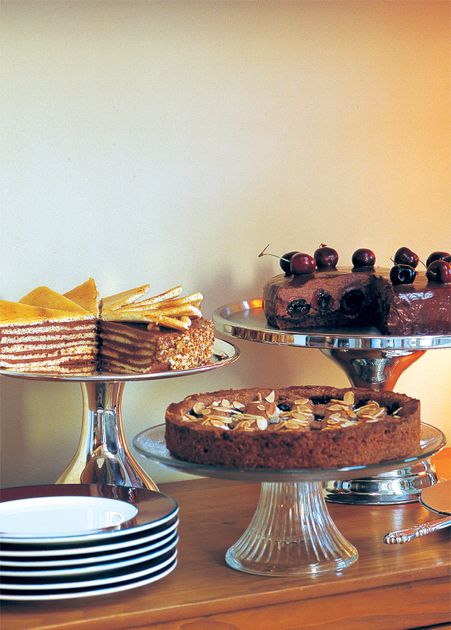
An Austro-Hungarian café (known as a Kaffeehaus in Austrian, kávéház in Hungarian, and kavárna in Czech) is living history. It was from the Café Dommayer that the lilting music of Strauss, inseparable from central European culture, first caressed Viennese ears. The violent 1848 Revolution erupted from Budapest’s Café Pilvax. The compeers of Václav Havel and his compatriots organized Czechoslovakia’s Velvet Revolution over coffee at the Café Slavia. The intelligentsia of all three cities used the cafés as their living rooms, occasionally laying down their pens to argue the latest developments in literary, art, and music circles. Historical and geographical names jump out from the menu—Malakoff,