
Advertisement
Materia Prima
Basic Ingredients
Appears in
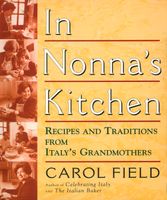
By Carol Field
Published 1997
Open the door into the kitchen of any Italian grandmother, and you’re likely to find a spotless room with herbs on the windowsill, everyday implements like ladles and whisks, a cheese grater and colander hanging from a rack, an espresso pot on the stove, a bowl of coarse sea salt and a jar of olive oil on the counter, perhaps an arc of pots on the wall, and a wooden table with a pull-out drawer holding all of the eating implements. What you will not find are special measuring cups or spoons; these women use espresso cups and wineglasses, coffee spoons and ladles and most of all, they rely on their eyes and their noses and their hands, the preferred tools of true cooks. Their bowls may be mismatched, there may be just a few pots and pans, and the oven may have no thermometer or gauge (high, medium, and low are the choices) but should you ask how they know when a dish is properly cooked, the answers may range from a blank stare and shrugged shoulder (translation: it is obvious) to suggestions that a knitting needle or single reed from a whisk broom plunged into the interior should come out clean.