
Advertisement
Tea
Chai
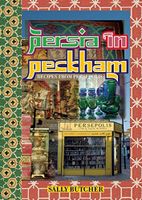
Published 2007
Chai is not a type of tea, nor even a brand, as certain clever marketing campaigns would have you believe. It is just the eastern word for tea. Tea in Iran is quite a different affair from our own homogenized blends which we tend to drink with milk.
Surprisingly, black tea entered Iran fairly late in the proceedings. Before the nineteenth century, coffee was the beverage of choice. Green tea was consumed, but it was nowhere near as popular in Iran as in neighbouring countries such as Afghanistan. Black tea seems to have passed from its Chinese source to the Russians, and it was they who brought it to Iran. It swiftly took root, both literally on the shores of the Caspian, and metaphorically in the hearts of the people. Tea is now consumed all day, every day, in every town and household of Iran, by everybody. It is the first thing you are offered when you visit someone’s home, and it is consumed extensively in bazaar and office alike as part of the language of business. Nearly all workplaces and households have a samovar at their disposal, wherein water is heated in a large boiler (usually electric these days, although formerly reliant on a central coal chimney). Tea is made in a pot, which is rested on top of the samovar – the rising steam keeps the tea hot. The idea is that a little thick, strong brew is poured from the teapot into an estekhan, or tea glass, which is then topped up with water from a tap on the samovar, resulting in a mellow golden colour (as Persians drink black tea, it is essential to dilute it thus, as it would otherwise be unbearably strong). Assuming that water levels are topped up from time to time, and fresh tea leaves occasionally replace the stewed ones, the samovar can thus be kept running all day.