Advertisement
Storage
Appears in
Published 2025
Fresh bread is essential for top-quality sandwiches. Stale or dry bread is undesirable. The following measures can be taken to ensure freshness:
- Daily delivery, or delivery as frequent as possible, depending on your location. Bread stales rapidly, and day-old bread has lost much of its freshness.
- Keep bread tightly wrapped in moistureproof wrapping until it is used. This prevents drying and guards against absorption of odors.
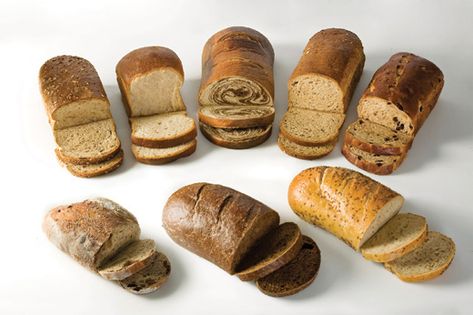
Breads made of various flours: top row: multigrain, white pan loaf, marble rye, whole wheat, and olive loaf. Bottom row: raisin swirl, pumpernickel, and Jewish rye.
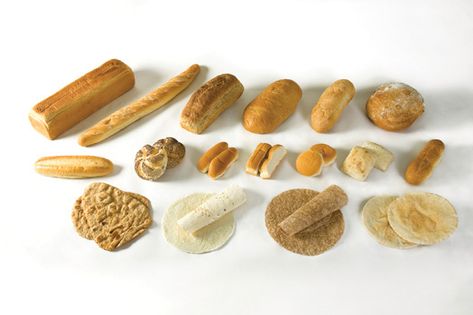
Breads in various shapes: Top row: Pullman loaf, baguette, home-style, bâtard, sub roll, and hearth. Middle row: Cuban, kaiser, hot dog, New England hot dog, hamburger roll, ciabatta, and steak roll. Bottom row: naan, flour tortillas, whole wheat wrap, and pita.
- French bread and other hard-crusted breads should not be wrapped, or the crusts will soften. These breads stale rapidly and should be used the day they are baked.
- Store at room temperature, away from ovens or hot equipment. Do not refrigerate, because refrigerated bread becomes stale faster.
- If bread must be kept more than one day, it may be frozen. Thaw frozen bread without unwrapping.
- Day-old bread may be used for toasting without loss of quality.