
Advertisement
Producer Profile: Rosalinda Guillen

By Abra Berens
Published 2023
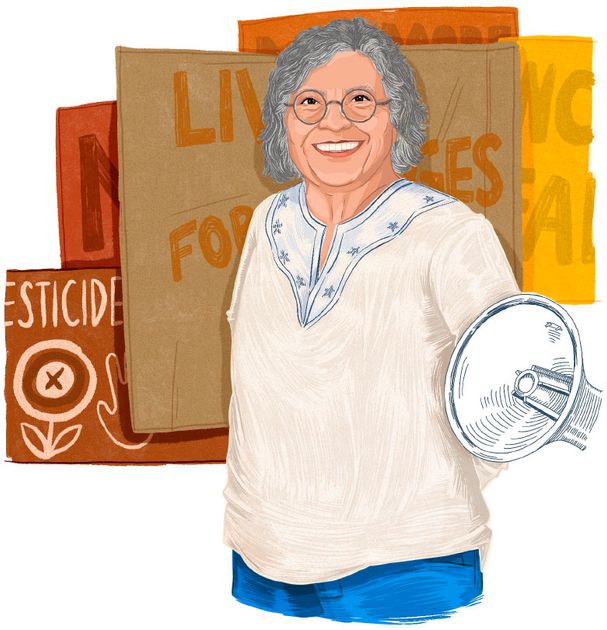
Abra Berens: I’m fascinated by the idea of all of the “invisible workers” along our food chain, folks that the general public doesn’t interact with. Most people know that crops are produced by migrant laborers, often Latino, but don’t know much about that community. What does a year in the life look like?
Rosalinda Guillen : Yes, migrant workers are often not seen, and the hardships of that work often go unrecognized or unaddressed. My father was a migrant farmworker in this country from when he was ten years old. He used to move from Texas to Michigan and Wisconsin to pick fruit, cherries specifically, and then on to North Dakota to harvest potatoes, and then back to Texas. Those migration patterns are old but are changing now, especially due to climate change. Many families are settling in the northern states because the southern ones are just getting too hot to grow some of the crops they specialize in—berries mostly, especially blackberries and raspberries.For migrating workers, it is a constant search for work. They have three to five farmers whom they know, either through word of mouth or local relationships, who will give them work at certain times of the season and that they can go back to year after year. Keep in mind, none of that work is guaranteed. Once the peak season for one grower is over, they jump into the peak season for the next crop.
There are sometimes gaps in that work and families have to decide whether to find more work in those gaps or use the time to rest. Most farmworkers don’t see their families much in the summer because they are working all the time. After harvest time, it is often family time.
When the winter sets in, they’re on to field maintenance: pruning, thinning, etc. All of this depends on their reserve, how much they’ve earned. That’s their goal, to earn enough to survive the winter.
If the reserve isn’t enough, they will find other work in the gaps to make it through—the seafood industry, flower industry, even the service industry. The father might have a job cutting fish at a fish processing plant, and the mother is working at a hotel laundry. Then they move out of that and back to field work. It used to be that in the gaps, families would travel home to Mexico to see their extended families, spend the month of Christmas together, and then return, but they can’t do that anymore because of all of the troubles at the border and immigration issues. That’s basically the year.