
Advertisement
Blanching, fermentation and spicy dressings
Appears in
Published 2011
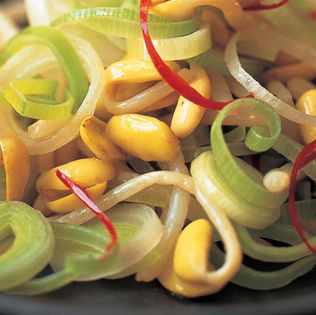
Korean table settings traditionally rely on a range of dishes shared between all the diners. However, there are some dishes that are served in individual portions to each person, and these comprise the heart of every Korean meal. Rice and soup are always present on the table - even at breakfast - but it is the vegetable accompaniments that vary from meal to meal throughout the year, and add a special character to even the simplest of repasts.
While rice and soup will remain customarily unchanged from season to season, the vegetables that make up a meal will vary depending on what is readily available. As with the cuisine of every country, Korean cooking enjoys recipes that make the most of the seasonal variation in fresh produce, and turn the ingredients into a dish suited to the weather and other fare on offer. These dishes are known as sangchae and comprise one half of the vegetable accompaniment dishes in Korean cuisine, the other half being namul recipes.