
Advertisement


Measuring equipment
Appears in
By Jeni Wright, Eric Treuille and Le Cordon Bleu
Published 1996
The first necessity far culinary success is to ensure that the right amounts of ingredients are used. Dry foodstuffs must be levelled off - unless heaped teaspoons or tablespoons are called for - and liquids should be viewed from eye level to ensure they reach the required depth. Spoons and measures are generally sold in both metric and imperial sizes.
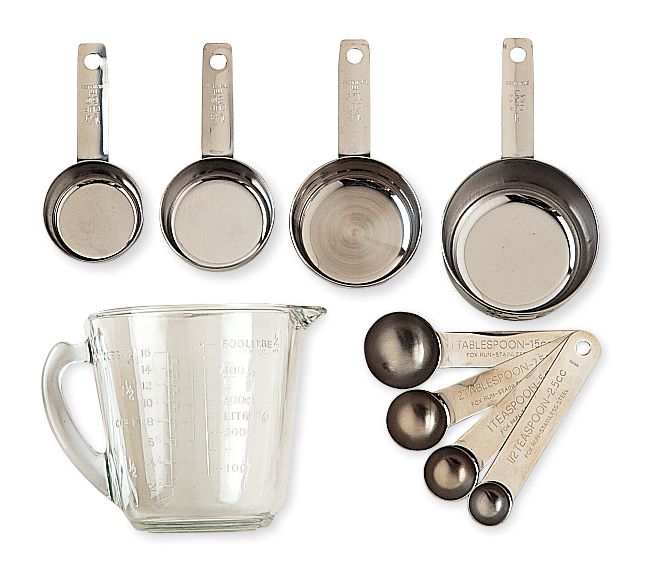
- Measuring Spoons - small amounts of dry ingredients are measured in teaspoonfuls or tablespoonfuls or fractions of these. Some are double-ended with imperial at one end, metric at the other.
- Measuring Jugs - for measuring the volume of ingredients, especially liquids. The best jugs have metric and imperial markings, plus American cups.
- Scales - essential when recipes call for ingredients by weight. There are many varieties, from balance scales to digital display types. The best provide both metric and imperial weights.
- American Measuring Cups - the volume of both dry and liquid ingredients can be measured in cups and fractions - ¼, ⅓ and ½ - of a cup. Usually sold in nesting sets.