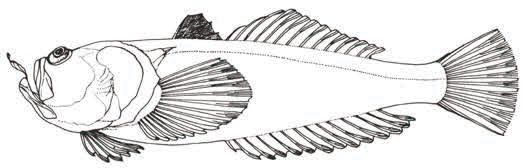
* A puzzle. The fish is often caught in Tunisian waters, but there is no clearly established name. Tunisian sources generally reject the name bouma, cited by some, but suggest no plausible alternative except billem, the name of the weevers.
This fish presents numerous problems of nomenclature. Perhaps because of this, there is a name (tiryaki) in use in Turkey which simply means ‘tiresome’.
What is undoubtedly tiresome is the unnecessary reticence displayed by Badham (Ancient and Modern Fish Tattle, 1854) when he remarks upon the apparently strange fact that the classical Greek name for the fish was callionymus, meaning ‘of the beautiful name’. He explains that ‘the Greek compound, according to Hesychius, bears, besides its obvious, a more recondite meaning, which tallies so well with the conformation of the fish, that the sailors at Marseilles have coined two expressive patois words, which seem, though of course they are not, a translation of the Aristotelian epithet; an epithet which “. . . no modest matron of Marseilles would ever think of pronouncing, on account of its exceeding impropriety”.’ (To save the time of curious readers, I add that Liddell and Scott’s Greek-English Lexicon confirms that the word was used sensu obsceno, but offers no further illumination.)