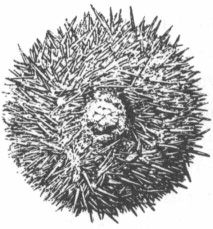
Up to about 8 cm in diameter. There are numerous species of sea-urchin. This one has a circumpolar distribution. Its range in the Atlantic extends down to the English Channel and to New Jersey. Europeans are more familiar with Paracentrotus lividus (Lamarck), the main edible species of the Mediterranean, where it is common to see basketfuls on display, with one urchin cut open to reveal the star-shaped orange ovaries which are the edible part. These can constitute as much as 10 to 20 per cent of the weight of the creature; but even so they make tiny mouthfuls. The main demand for them is in France, which imports some from Ireland, and in Japan, which has been experimenting with shipments from North America. Consumption in North America itself is very small, although sea-urchins from the Bay of Fundy have been marketed in New York. Strongylocentrus droebachiensis is abundant on the coast of Maine, but the creatures are there called ‘whores’ eggs’ and regarded with horror. It does not seem to be marketed in northern Europe.