
Advertisement
Family Brassicaceae
Appears in
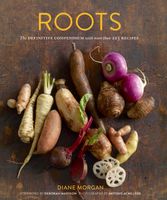
By Diane Morgan
Published 2012
Maca is native to the Andean region of Bolivia and Peru. The portion of the plant that is consumed as a “root vegetable” is the taproot. Maca flourishes at high elevations despite cold temperatures, adverse soil conditions, and pests, a resilience that accounts for its role as a pantry staple for over two thousand years. It is botanically related to radishes and turnips, but its shape varies widely from triangular to spherical and every profile in between. It comes in a variety of colors, as well. The sweet flavor of the cream-colored root is favored in Peru, though blue, black, and red varieties are all increasing in popularity due to the various flavor and nutritional benefits each offers. In Peru, maca is roasted; mashed and boiled to produce a sweet, thick liquid; fermented to make a rustic beer; and dried and ground into flour or reconstituted in milk for porridge.