
Advertisement
A Spanish Olive Oil Sampler
Appears in
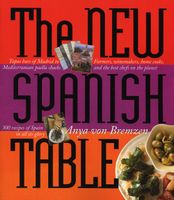
Published 2005
No ingredient is more fundamental to Spanish cooking than olive oil, which ranges from an inexpensive, everyday fat for frying to pricey elixirs reverentially drizzled on langoustines or swirled into soups. Having supplied the Roman empire with the bulk of its oil in antiquity, Spain never looked back and today produces some whopping 50 percent of the world’s olive oil. Although most Spanish oil comes from the Andalusian provinces of Jaén and Córdoba, other regions, especially Catalonia, are playing catch-up with boutique products that can give Tuscany or Liguria a run for their olives. Generally, the dry Andalusian heat results in oils that are smooth, golden, and fruity, with just a hint of the peppery bite we associate with Tuscan oils. But with so much variety, it’s best not to generalize. Likewise, one should retire the notion that there’s such a thing as generic, all-purpose olive oil. Both chefs and home cooks these days choose their olive oil depending on how they plan to use it (frying, sautéing, drizzling, dressing a salad) and on the flavor they desire (fruity, peppery, smooth, astringent, delicate, robust). As I write this, I have some eight different Spanish olive oils arrayed on my kitchen counter: Each has its own nuance, texture, and color.