
Advertisement
Food for the Spirit
Appears in
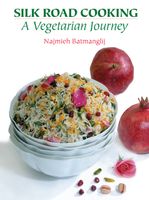
Published 2000
The countries that lie along the ancient Silk Road share a remarkable legacy of religious interchange, as archeology shows in such curiosities as these: In Baghdad, a bazaar built over a Buddhist temple that was built in turn over a Zoroastrian fire hall; in the highlands of Pakistan near Peshawar, the ruins of a rich Buddhist monastery complex designed in the style of classical Greece; in vast cave systems near Dunhuang in western China, scrolls bearing the prayers of a religion known as Manichaeism; in Xian (once Chang’an), a monument consisting of a Christian cross floating on a Taoist cloud above a Buddhist lotus; near Kaifeng, inscriptions that trace the presence of a Chinese Jewish community to the Han dynasty (202 BCE to 221 CE). Where the caravans traveled, ideas followed; as fields were sown and orchards planted, so philosophies grew and flourished.