
Advertisement
Pies, Cakes, and Croustades
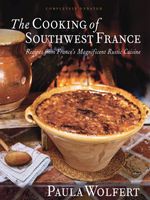
Published 1987
The pastry-covered pie, called croustade in the Languedoc and Guyenne, pastis in the Quercy and the Périgord (postis in dialect), and tourtière in the Tarn and the Landes, is basically the same dish: paper-thin sheets of strudel-like pastry brushed lightly with clarified butter or goose fat and wrapped about a sweetened fruit filling, shaped according to the custom of the region, then baked. The different shapes are interesting.
In the Quercy, the pastis is rolled up like strudel, then shaped into a serpentine coil. In the Languedoc, the same cake shaped in this fashion is called en cabessal, referring to the strip of cloth wound into a spiral and placed flat on a woman’s head to enable her to carry pitchers of water or baskets of grapes. In the Landes, a tourtière is a flattened disk; in this region, a pastis refers to a kugelhupf-style cake. And in Gascony, the croustade (or pastis in patois) is shaped like “a giant overblown tea rose, ” a description coined by the food writer Anne Penton in her book