
Advertisement
Consuming Passions: Toum
21 August 2026 · Consuming passions
In the latest feature in our ongoing Consuming Passions series, cookbook lover and ckbk enthusiast Amanda Carroll writes about toum, a Middle Eastern lemon and garlic sauce which has always been at the heart of her family’s culinary traditions…
By Amanda Carroll
Toum was always on the table…
When I was a child, my family frequented a restaurant near our Denver home run by a Lebanese and Moroccan couple. My Iraqi father made friends wherever he went, so I barely remember consulting a menu. We simply sat down, and dish after dish appeared. Toum was never something I thought to order. It was simply there: snowy white, unapologetically garlicky, and ready for every kebab, falafel, and torn piece of pita on the table.
By itself, I'd describe it as "sharp" since it is so garlic-forward, but when combined with the rest of the food on the table, it is the perfect accompaniment to everything. My family has continued the tradition of making a family-style Middle Eastern feast. A typical feast at my family's table includes rice, hummus, lamb kebabs, chicken kebabs, kafta kebabs, salad, falafel, dolmas, baba ghanoush, spinach sambousek, olives, pita, and, of course, toum.
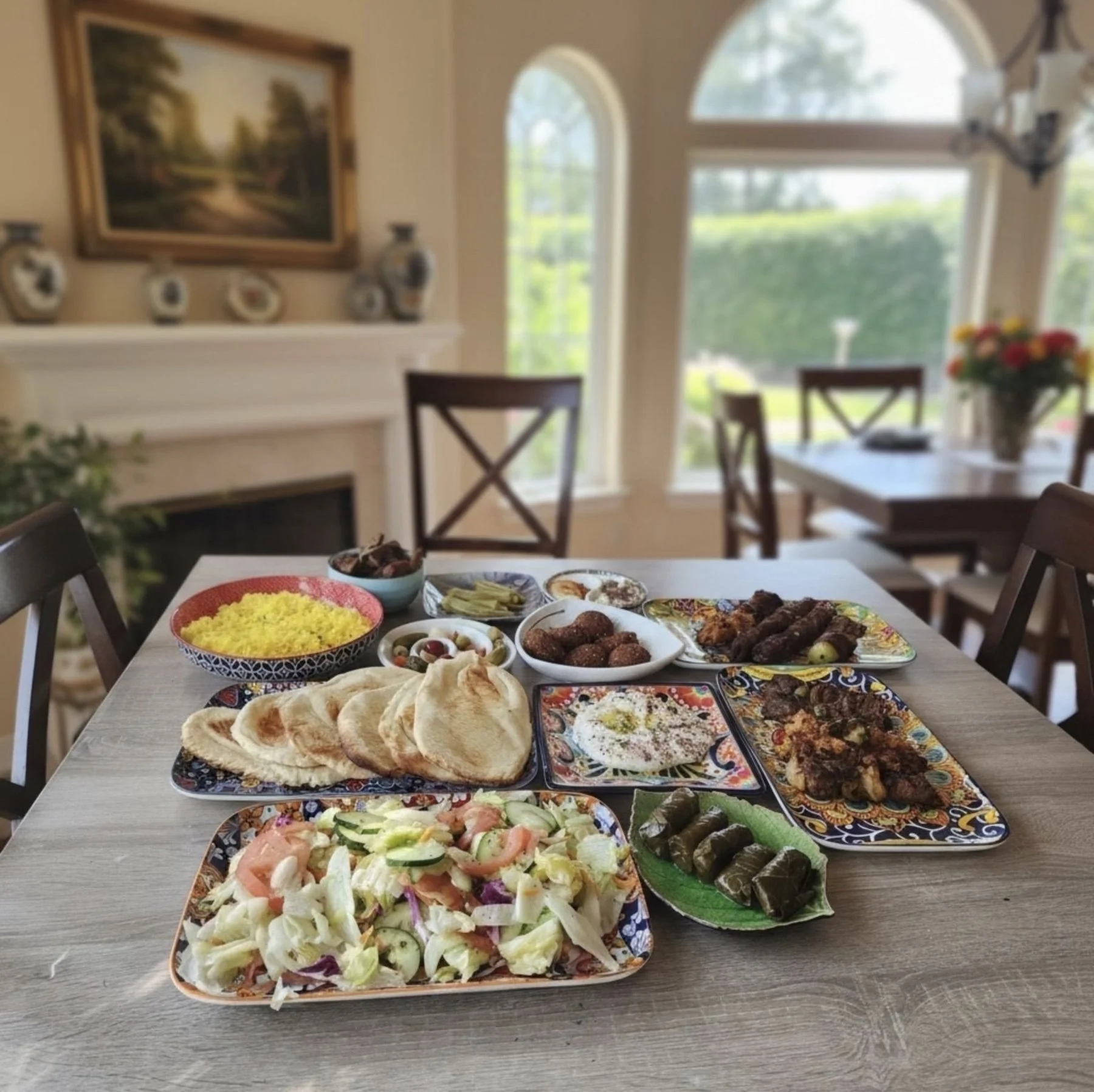
A family mezze feast centered around toum. Fresh pita, grilled meats, falafel, stuffed grape leaves, saffron rice, hummus, pickles, olives, and salad surround the garlic sauce that has been a fixture at my family's table for generations.
I happened to marry another garlic lover, whose mother was a Hungarian immigrant. The first time he tried toum, his eyes lit up. We order takeout frequently from a nearby Syrian restaurant, and we never forget to order the combo that comes with toum.
History
Levantine culture is rich in ancient traditions, both culinary and otherwise. (Although, isn't all history somehow related to food?) Levant comes to the English language through the French word levant, meaning "rising", ultimately referring to the rising sun in the east.
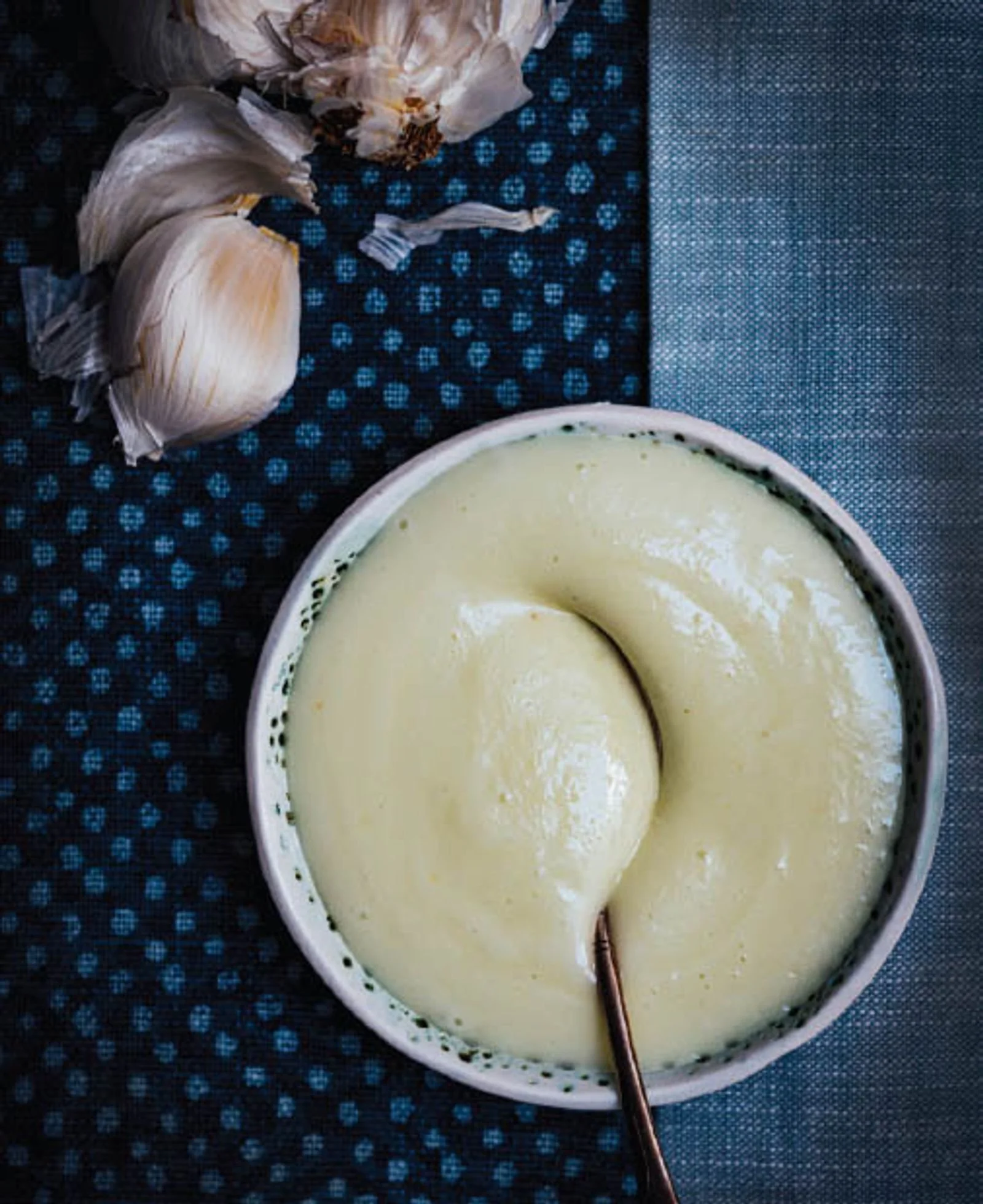
Toum, which also goes by names such as tooma, toumiya, salsat toum, tumiyya, and muthawama, is a simple sauce typically made from garlic, salt, oil, and lemon juice. Closely associated with Lebanon and enjoyed throughout the Levant, toum belongs to a broad family of Mediterranean garlic sauces. Traditionally, toum was ground with a mortar and pestle, though food processors are now more common and create a creamier texture.
It is now a very common condiment throughout Middle Eastern cuisine, served with everything from falafel, pita, kebabs, French fries, chicken, and artichokes.
Variations
The book The Flavor Equation by Nik Sharma, a scientist and food blogger who uses the science of taste to create recipes, has a classic version of Toum. It is recommended with Gunpowder Oven "Fries" with Goat Cheese Dip, Lamb Chops with Scallion Mint Salsa, or simply used as a dip or sandwich condiment.
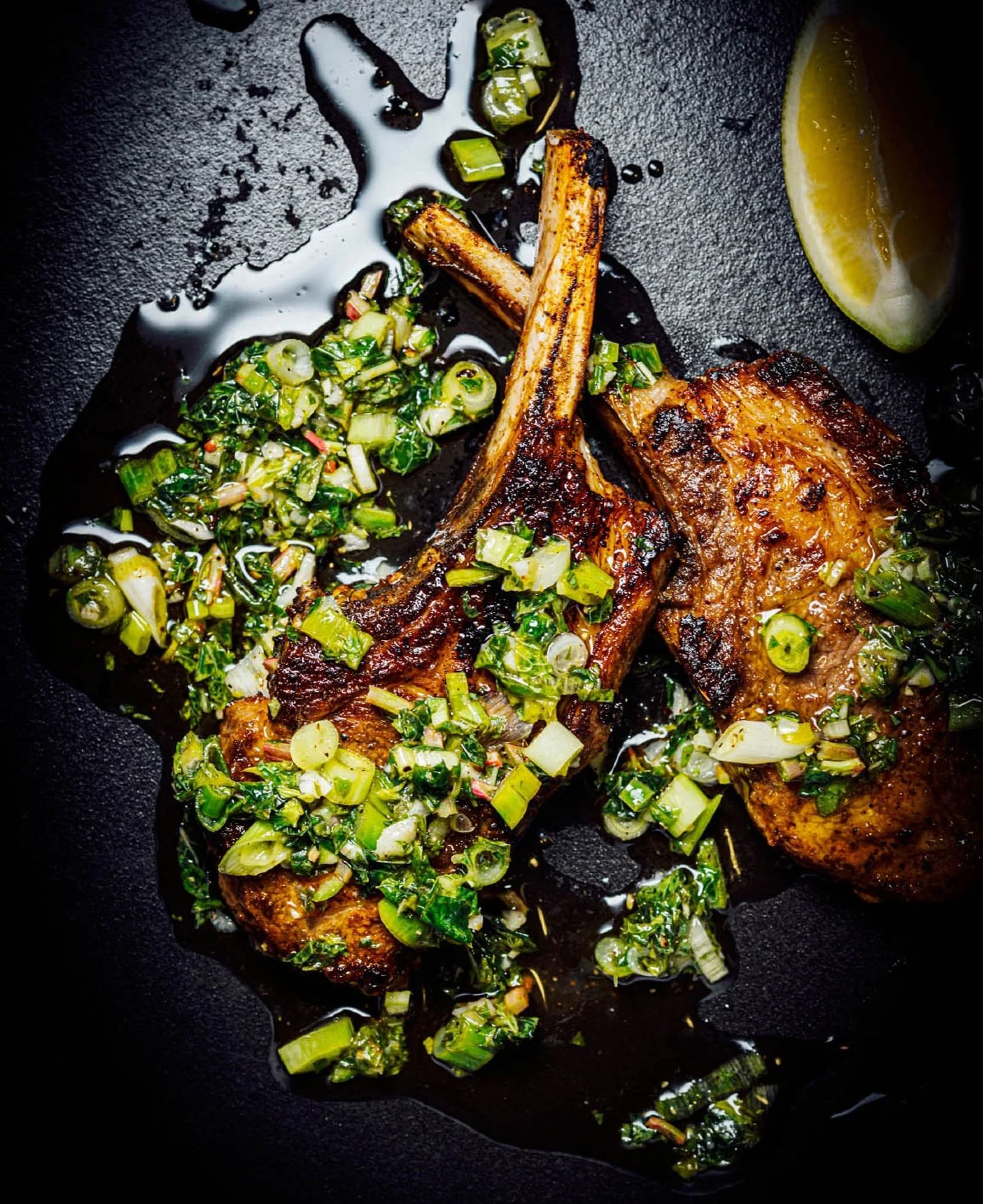
Lamb Chops with Scallion Mint Salsa fromThe Flavor Equation by Nik Sharma
Another less traditional but equally interesting variation is toum from Lands of the Curry Leaf by Peter Kuruvita. This variation contains sour cream, Greek yoghurt, cilantro, and rice bran oil and has an Afghani origin.
Home Made by Yvette van Boven offers a unique version of toum in its recipe called Toomeh, which incorporates mashed potatoes.
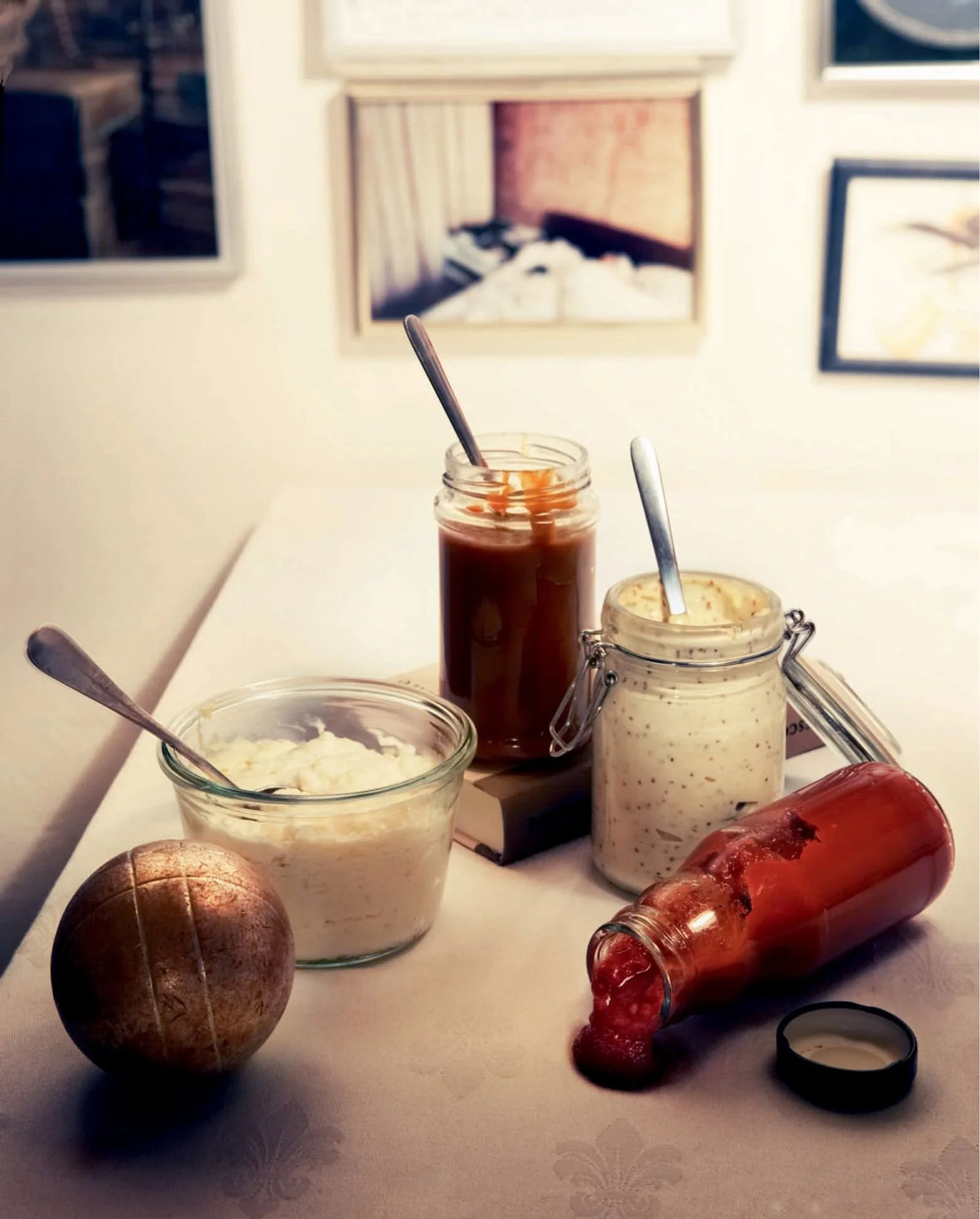
Across cultures and history, many versions of toum have evolved. One Northern Lebanese variation is called zeit wa toum, which includes mint in the mixture. There is spicy toum, which adds hot sauce, pepper flakes, or chilli paste to the mixture. A lesser-known version is tom bi debs, which adds pomegranate molasses for a sweet hint. What all of these variations have in common is their use of the emulsion technique. An emulsion is a combination of two liquids that typically do not mix but are held together by an emulsifier. In toum, as the oil is incorporated little by little, compounds and tiny solid particles from the crushed garlic help stabilize the mixture, transforming it into a thick, fluffy emulsion.
Beyond Kebabs and Flatbread
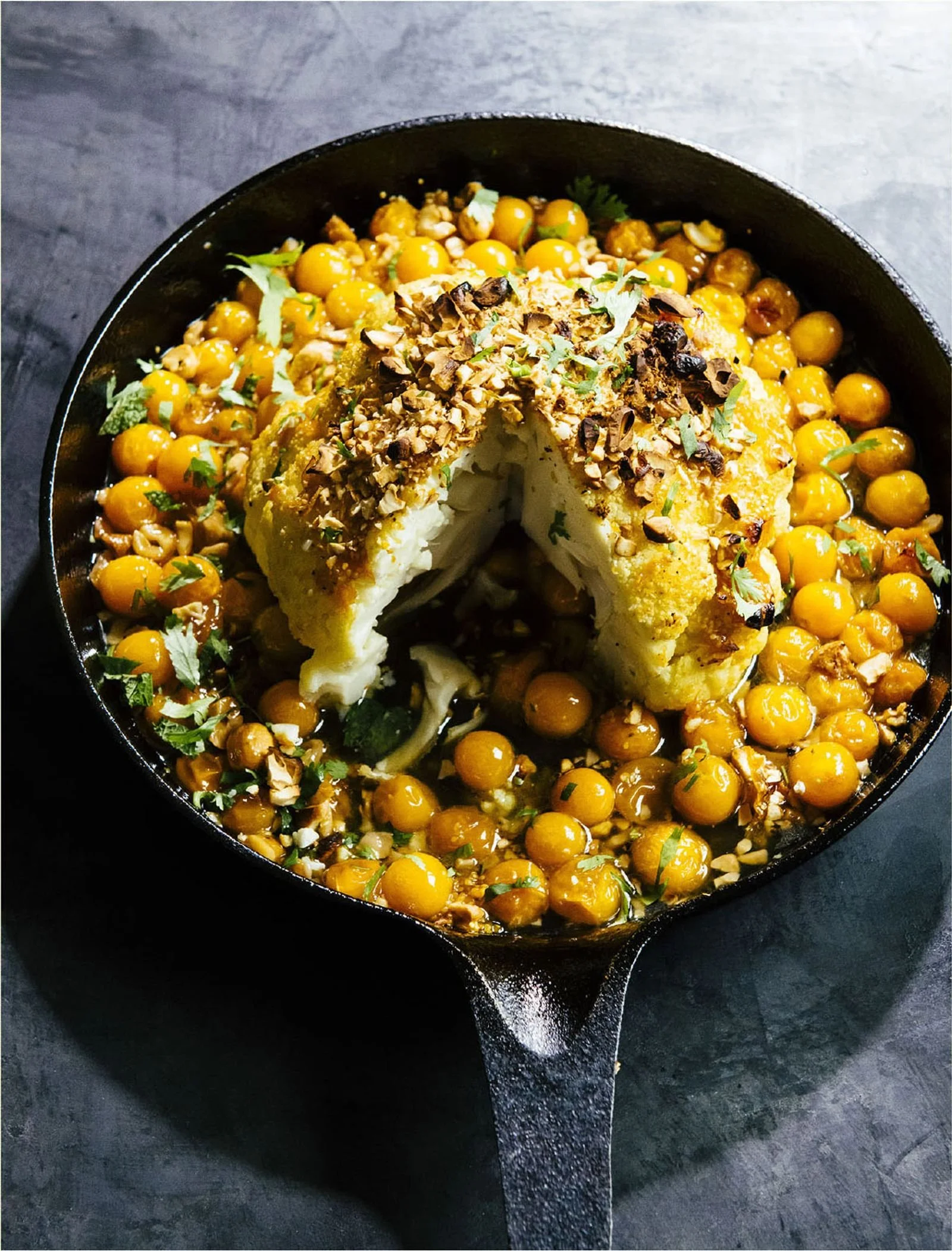
Other than using toum in the traditional ways discussed above, there are many recipes that incorporate toum in nontraditional and creative ways. The book Pulp by Abra Berens, which focuses on cooking with fruit, has a hearty vegan whole cauliflower dish roasted with chopped cashews and ground cherries that uses toum as a dipping sauce. The recipe is called Cashew Cauliflower with Ground Cherry Glaze and Toum. The book has its own recipe for homemade toum, but store-bought toum can be used on a busy day. This book also includes a recipe for Leg of Lamb with Apricot Bulgur, Herbs and Toum, which is another interesting method of pairing fruit with toum. This book provides an incredibly useful tip that, while toum keeps well in the refrigerator, the garlic smell can permeate plastic, so storage in a glass container is best.
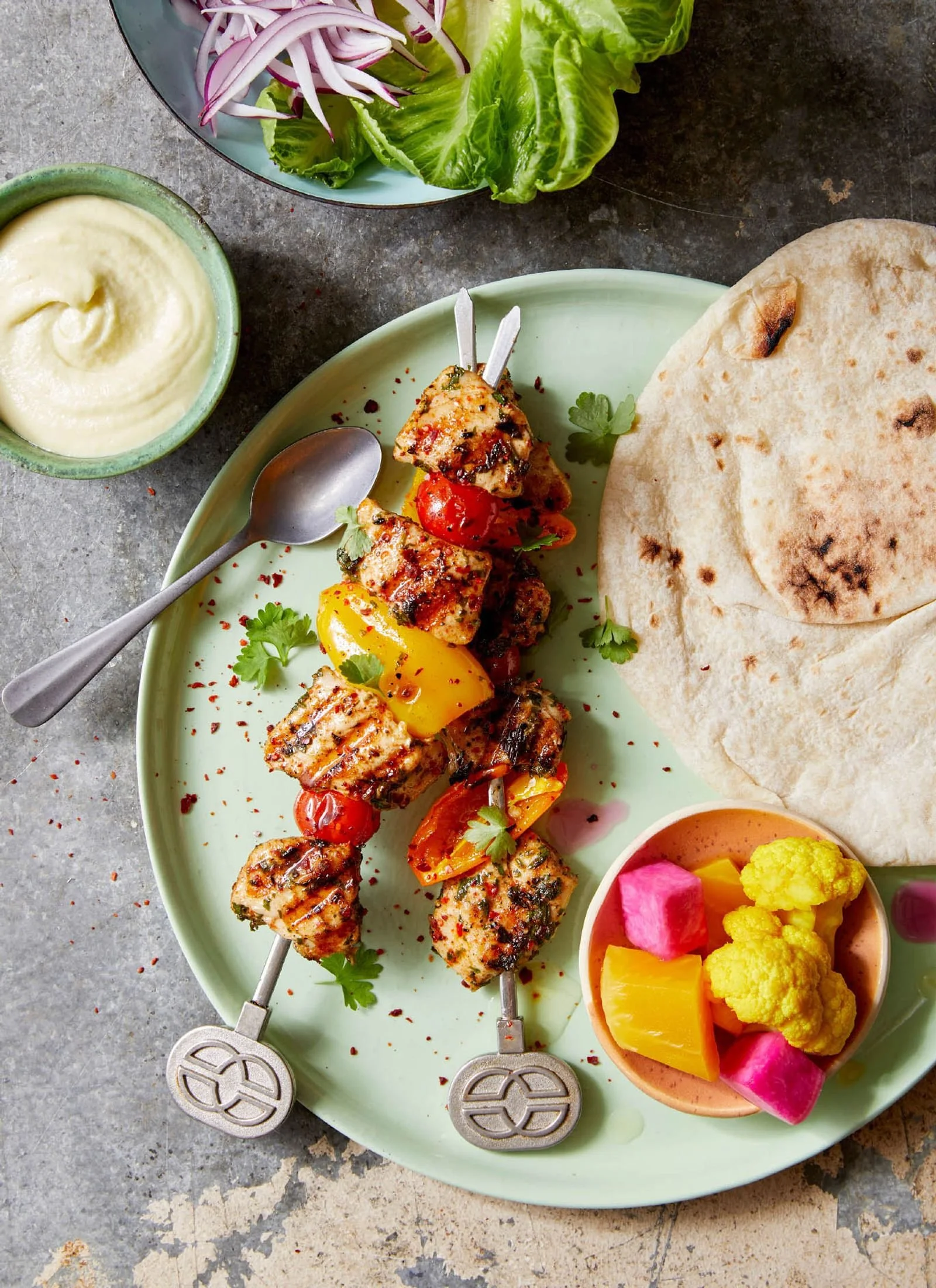
The IACP award-winning book Flavors of the Sun by Christine Sahadi Whelan provides a more traditional use of toum in the recipe Chicken Kebabs with Toum. This book's recipes all come from Sahadi's Market in Brooklyn, New York. This particular recipe was inspired by a Middle Eastern deli called Karam (also in Brooklyn), which serves a whole rotisserie chicken with toum for dipping. Rather than serving a whole chicken, though, the recipe uses Middle Eastern-spiced chicken breast pieces skewered with bell peppers and tomatoes, and of course with toum as the dipping sauce. Traditional Middle Eastern dishes like this are commonly served with bread, such as pita, and some variation of pickles.
The Epic Air Fryer Cookbook by Emily Paster is exactly what it sounds like: a book filled with unique recipes to make in your air fryer. Multiple recipes in this book suggest using toum as a dipping sauce, including Falafel with Israeli Salad, Twice-Cooked Tostones with Mint Chimichurri, Steak Fries with Toum, Caribbean Yuca Fries, and Sweet Potato Fries with Curry Yogurt Dip (which suggests toum as an alternative to the curry yogurt dip).
The book The Jewelled Kitchen by Bethany Kehdy, a book featuring Middle Eastern and North African cuisine and praised by Yotam Ottolenghi, also features its own version of toum in the recipe for Garlic Gone Wild. The author recommends pairing it with raw kebbeh (which is a Middle Eastern version of steak tartare), spreading it on heirloom tomato slices drizzled with olive oil and sprinkled with sumac, or pairing it with chicken, such as the Wild Thyme Chicken from the same book.
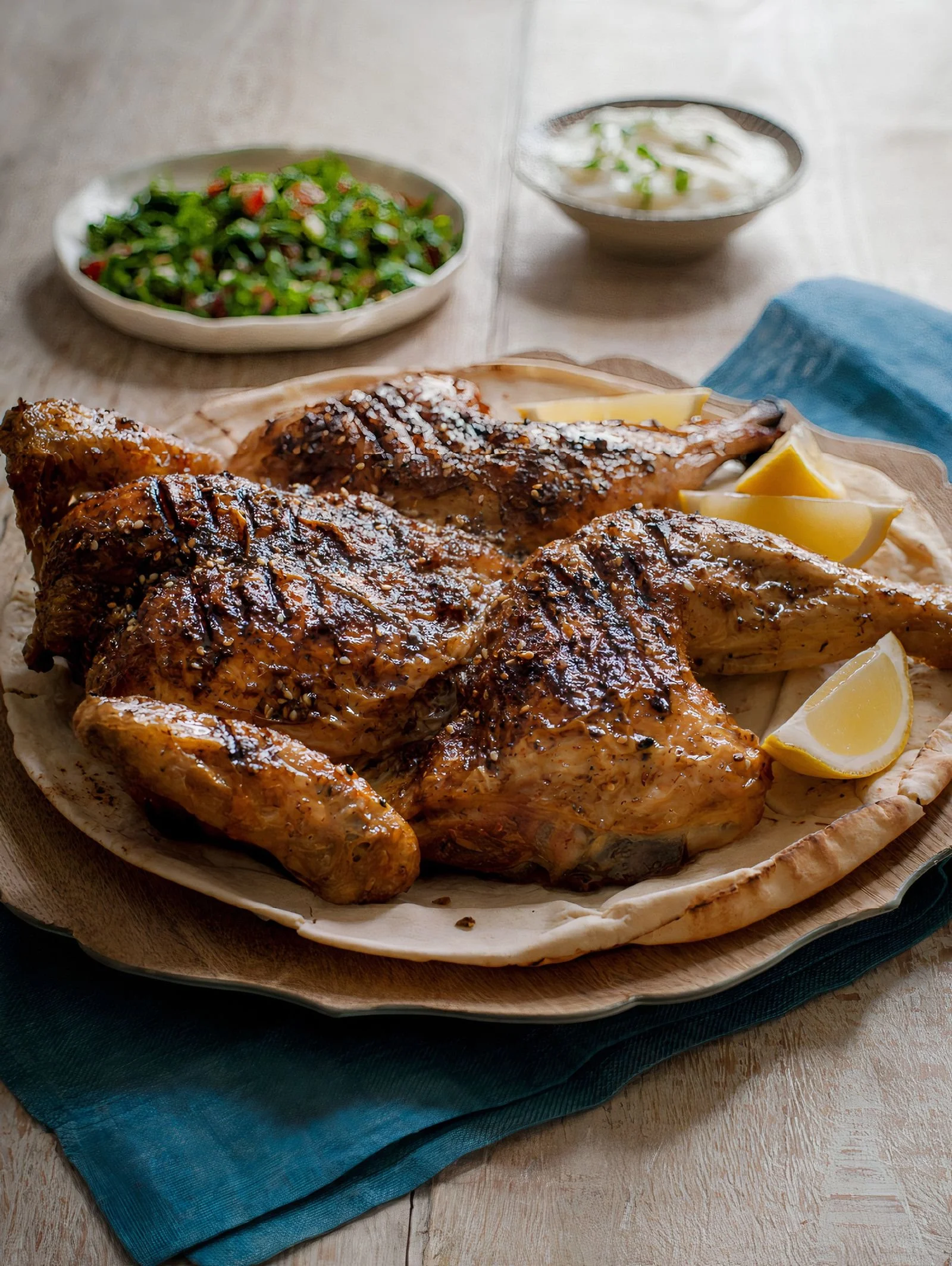
Another homemade version of toum can be found in the book Classic Lebanese Cuisine by Kamal Al-Faqih. The author recommends serving it with either Grilled Chicken Kebabs or using it to make garlic bread.
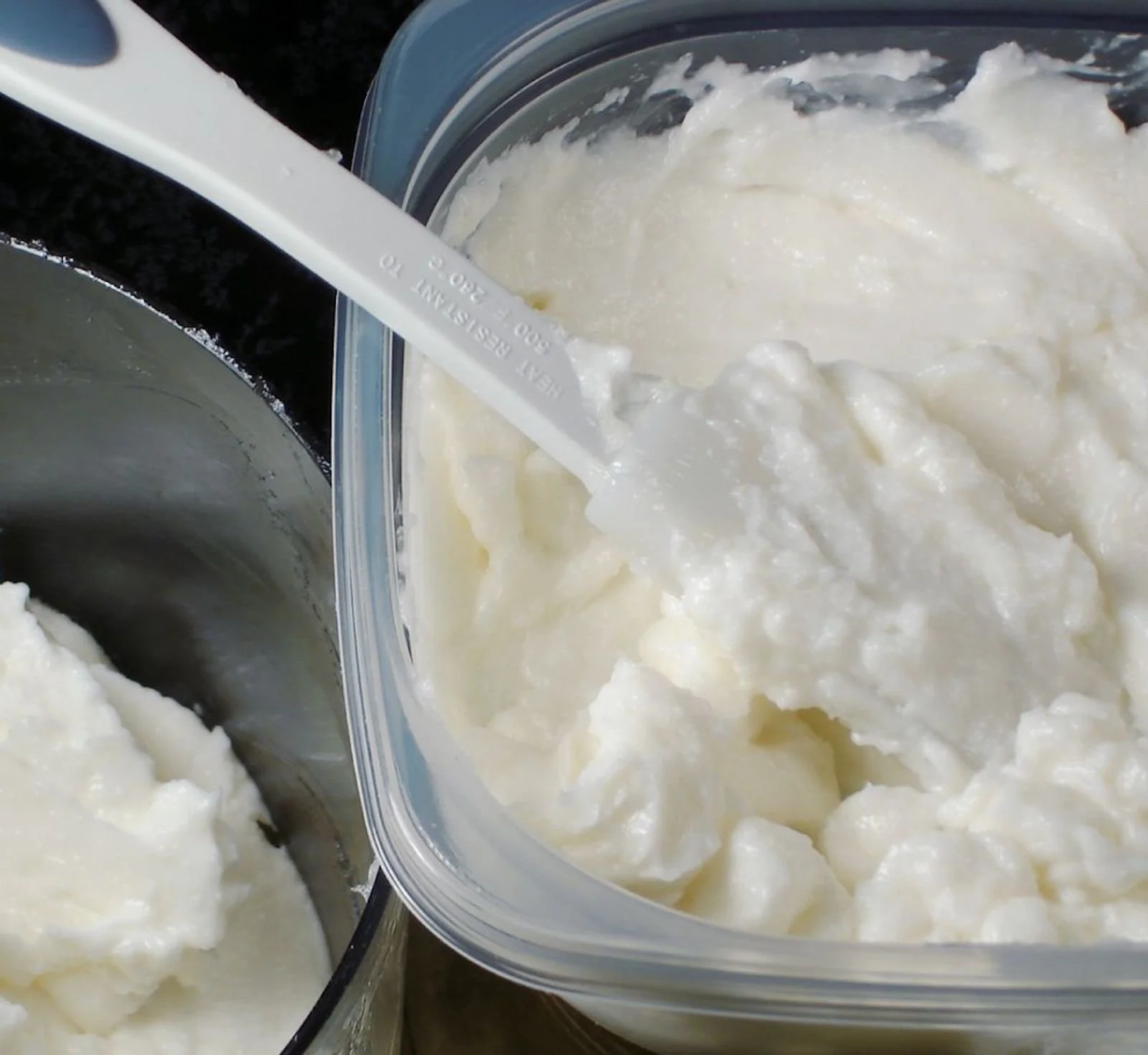
Robust Garlic Puree from Classic Lebanese Cuisine by Kamal Al-Faqih
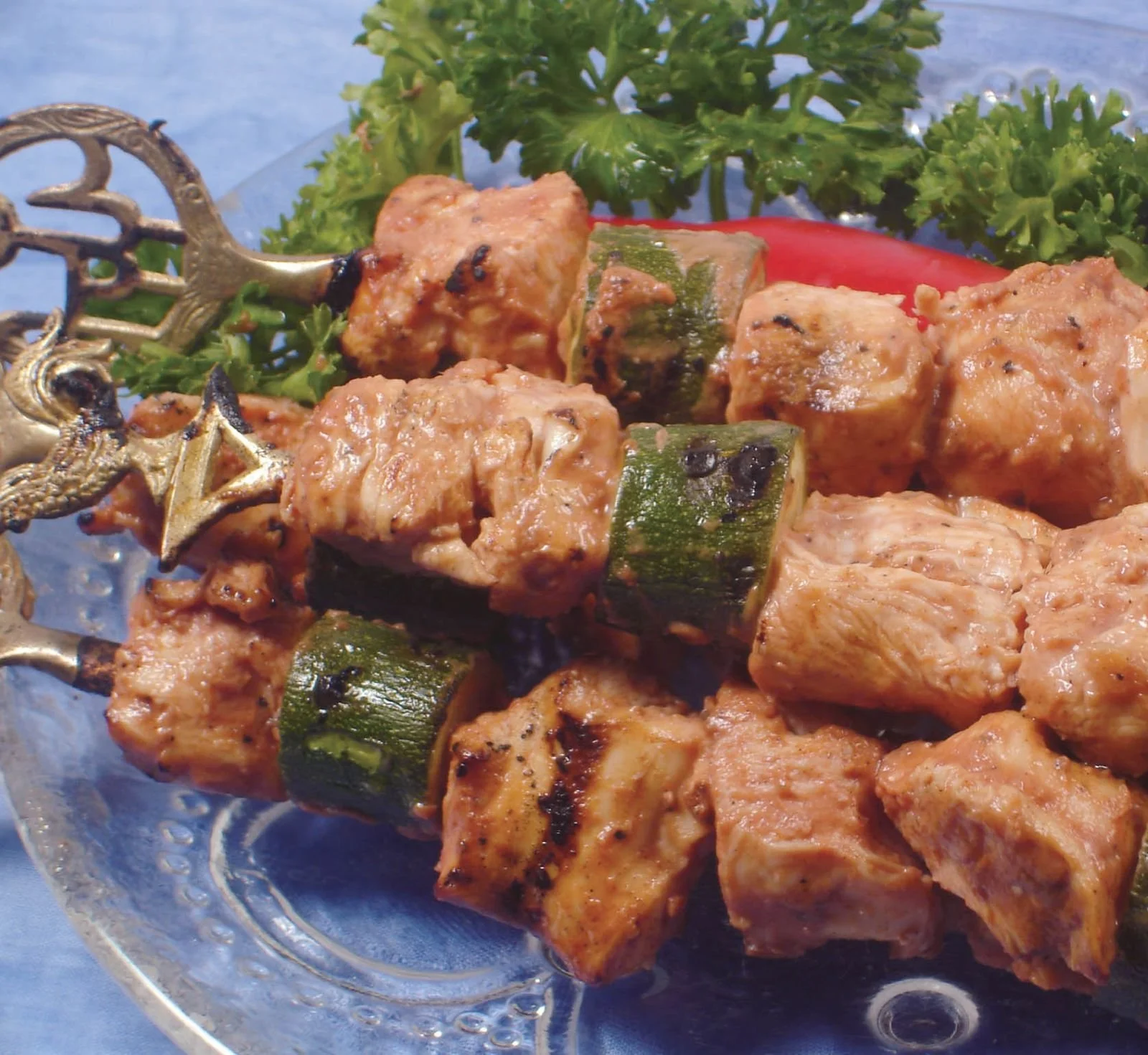
Grilled Chicken Kebabs from Classic Lebanese Cuisine by Kamal Al-Faqih
What I can assure is that when my family is enjoying Middle Eastern cuisine, toum will always be on the table…
Featured recipes
View full collection
About the author

Amanda Carroll lives in Westminster, Colorado, with her family and a lively crew of five rescued animals. She is the mom of two elementary-aged boys who are the center of her world. When she isn’t cooking for family and friends or experimenting with something new in the kitchen, she can usually be found reading, gaming, or spending time with her many four-legged companions.
More ckbk features

Keep the recipes you need available in an instant using our pinned recipe feature!
Ceri Jones offers many different takes on this classic Italian accompaniment

Cooking with Kids: Part 4 – Party Time!
Charlie Cart founder Carolyn Federman concludes her series on cooking with kids with ideas for party snacks and drinks
Advertisement